Aluminum is not steel, and treating it like steel with a blaster is how you end up with pitted, wavy, or blown-through metal. If you are planning on sandblasting aluminum — a boat trailer fender, an HVAC condenser housing, a golf cart frame, an old screen enclosure track — the rules change. Around Gainesville we get calls every month from people who tried it themselves with a rented pot and standard sand, and ended up with more damage than they started with. Here are six honest rules, not the sales pitch version.
Why aluminum blasts differently than steel
Steel is dense and forgiving. Aluminum is soft, light, and thin in most of the parts people bring us — trailer panels, boat hardware, wheels, extruded frame stock. It also carries a naturally occurring oxide layer that forms almost instantly once bare aluminum hits air. That oxide layer is what protects the metal from corroding further, so blasting is not just about stripping paint. It is about removing the right amount of oxide and old coating without gouging or thinning metal that was never that thick to begin with. Push too hard, and you warp a panel or blow a hole through a fender in about the time it takes to say “oops.”
This is also where alloy matters more than most people expect. A 6061 boat trailer frame, a cast 356 outboard bracket, and stamped aluminum diamond plate are not the same material to a blaster even though they are all “aluminum.” Cast pieces tend to have more porosity and can hide corrosion below the surface. Extruded and stamped pieces are thinner and warp faster under heat. We look at what we are actually holding before we pick media and pressure, not after.
Rule 1: The abrasive matters more than it does on steel
Steel grit and heavy coal slag are too aggressive for most aluminum. We lean on softer, rounder media — glass bead, plastic abrasive for delicate parts, or a fine aluminum oxide run at low pressure — depending on the job and the alloy. The goal is a light surface profile that lets primer bite without carving into base metal that is often only a fraction of an inch thick. If a shop tells you they are running the same media on your aluminum boat trailer that they use on a steel I-beam, ask them to explain why. There usually is not a good answer.
Rule 2: Pressure and standoff distance do the real work
Drop the nozzle pressure, open the standoff distance, and take an extra pass instead of muscling through it in one. Aluminum warps under concentrated heat and force a lot more readily than steel does — thin panels can dish or ripple before you even see discoloration. This is the part that separates someone who blasts aluminum for a living from someone guessing with a rental unit from a hardware store on a Saturday.
Rule 3: Watch for warping and heat buildup on thin stock
Boat trailer fenders, aluminum diamond plate, screen enclosure track, and older aluminum siding are all thin enough to warp if you dwell in one spot too long. We keep the gun moving in overlapping passes and check the panel by hand between passes. If it is getting warm, we back off before the metal tells us it is too late. On thicker castings, like an old outboard bracket or a farm implement housing, there is more forgiveness, but the oxide layer and any embedded corrosion still call for a lighter touch than bare steel gets.
Rule 4: Dustless or wet blasting sometimes wins on aluminum
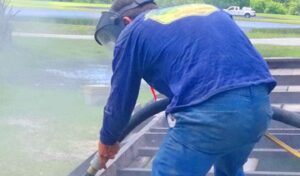
For aluminum with pitting or heavy oxidation, we will sometimes run dustless blasting instead of dry media. The water suspends the abrasive, which lowers the heat and the aggression at the surface — useful on thinner panels or anything with old paint that is flaking rather than firmly bonded. It trades one problem for another, though. You get a wet part afterward, and aluminum needs to dry and be primed fast, because bare metal starts oxidizing again almost immediately — the same idea as flash rust on steel, just faster and less visible.
Rule 5: Know when NOT to sandblast it at all
Here is the honest part most people skip. Thin aluminum trim, old screen frame extrusions, and some cast aluminum with hairline cracks are bad candidates for any abrasive blasting. A wire wheel, a chemical stripper, or in some cases just replacement is the smarter call. We have turned away jobs on paper-thin aluminum flashing because blasting it would have done more harm than the corrosion already had. If a shop never tells a customer no on aluminum, that shop has not blasted enough of it yet to know better.
Rule 6: What goes on after blasting matters as much as the blasting itself
Bare aluminum needs a self-etching primer, not a standard steel primer, because ordinary primers do not bond well to aluminum oxide the way they bond to bare steel. Skip this step, or use the wrong primer, and the new coating peels inside a season — especially with Gainesville’s humidity and UV load working against it year-round. We handle blasting and painting and coating services as one job for exactly this reason. The gap between stripping aluminum and priming it is where the metal gets away from people, sometimes within hours.
What we actually see around Gainesville and Alachua County
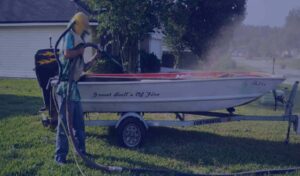
Most of the aluminum work that comes through here is not glamorous. It is boat trailer fenders and cross-members corroded from repeated dunking at Newnans Lake or Lake Wauburg. It is HVAC condenser housings baking outside a UF-area rental all summer. It is old screen enclosure frames around Alachua and Newberry that have gone chalky and pitted after a decade in the sun, and the occasional farm implement bracket that is aluminum instead of steel and gets treated wrong by whoever looked at it first. Every one of those jobs gets handled differently — media, pressure, and dwell time all change based on the alloy, the thickness, and how far gone the oxidation already is. That is the part that does not show up in a quick internet search: aluminum is not one material, it is a family of alloys, and a 6061 trailer frame does not blast the same as a cast 356 bracket.
A quick way to tell if a piece is a decent candidate before you call anyone: tap it. If it flexes or oil-cans under light pressure, it is thin stock and needs a lighter approach or a different method entirely. If it holds firm and the corrosion is mostly surface-level pitting rather than pinholes you can see light through, sandblasting aluminum is usually the right call.
One more honest note: sandblasting aluminum almost always takes longer per square foot than the same job on steel. Slower pressure and extra passes mean more time standing at the same panel, not less. We will not guess at scope over the phone without seeing the part in person, because a trailer fender with surface pitting and one with pinhole corrosion underneath old paint are two different jobs that only look the same from across the driveway.
OSHA’s guidance on abrasive blasting covers the respiratory and containment side of this work, and it applies whether the metal on the table is steel or aluminum. Anyone running a rental blaster themselves should read the OSHA abrasive blasting standards before they start, not after.
If you are weighing sandblasting aluminum against just replacing a part, or you want someone to look at it before you rent equipment and find out the hard way, we are happy to take a look. Most of our metal sandblasting jobs in Gainesville start with a five-minute look at the part so we can tell you honestly whether it is worth blasting, and if so, what media and approach it actually needs.
Need sandblasting in Gainesville or nearby? Call (352) 663-1129 for a free on-site estimate. You will reach someone who actually does the work.