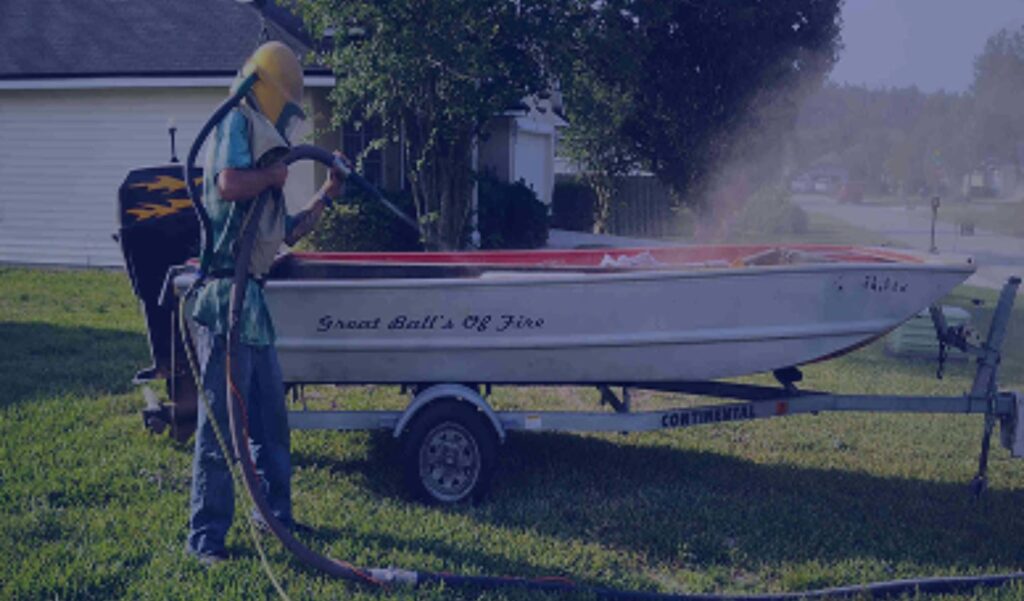
Boat bottom paint removal is one of those jobs that looks easy from ten feet away and gets complicated the second you put a scraper to it. Four layers of antifouling that went on across four different decades. Chalky red under hard blue. Somebody’s roller marks over somebody else’s brush marks, and a barrier coat underneath that may or may not still be doing its job. If you keep a boat in Gainesville, FL, odds are it lives on a trailer under a carport or out behind the barn, and that changes both what the bottom looks like and how the paint ought to come off.
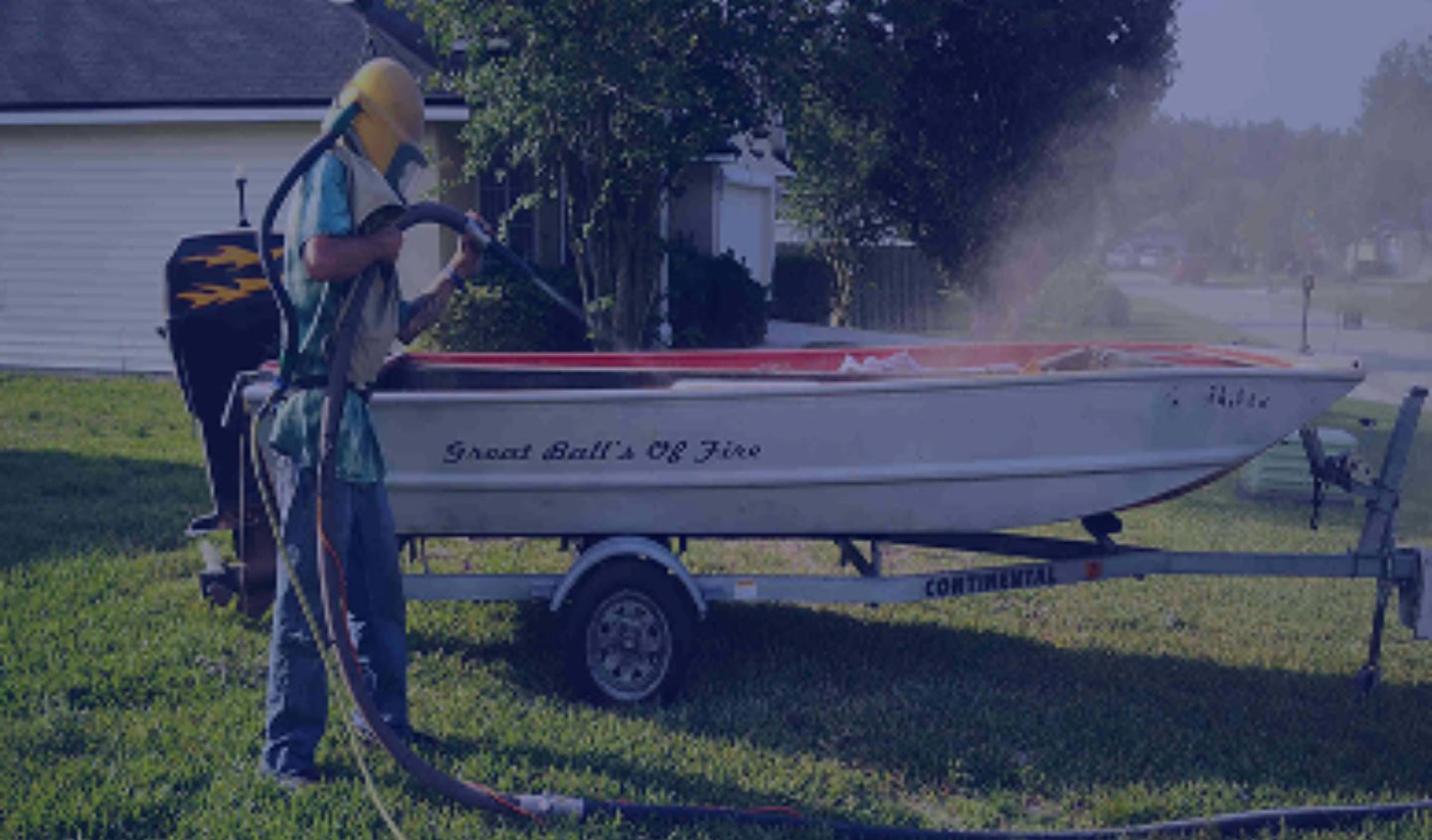
Here is the honest part most people skip: the blasting is the fast part. The prep, the containment, and what you do in the twelve hours after the hull goes bare are what decide whether the job lasts a season or a decade.
What boat bottom paint removal actually looks like
Antifouling paint is designed to shed. That is the whole point of it. The surface sloughs so growth cannot get a grip. Which means by the time you are ready to strip it, you are usually dealing with a soft, powdery top layer sitting on progressively harder, older layers, sitting on gelcoat or bare aluminum or steel.
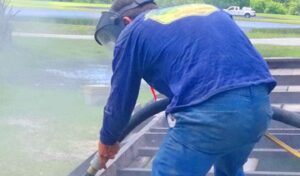
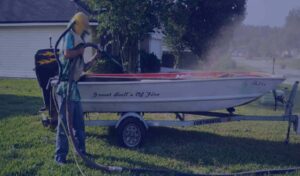
Sanding turns all of that into airborne dust you do not want near your lungs or your driveway. Chemical strippers turn it into a slurry that still has to go somewhere. Blasting, done with the right media at the right pressure, lifts it in one controlled pass and drops it where you put the tarps.
The media is the whole argument. On a fiberglass hull you are not trying to cut metal. You are trying to take paint off a laminate that will happily let you chew a hole in it if you get aggressive. Soft media, low pressure, and a hand that knows when to stop. On a steel workboat hull or an aluminum jon boat, the math changes completely.
Why Alachua County boats end up needing it
Gainesville is not a coastal town, but Alachua County is full of boats. Newnans, Orange Lake, Lochloosa, Santa Fe. Plenty of folks trailer out to Cedar Key, Suwannee, or Crystal River on a Saturday and park the rig back home Sunday night.
Trailered boats build a different problem than slip-kept boats. Less growth, more layers, and a lot more sun. Florida UV bakes old antifouling into a hard, cracked shell that a pressure washer will not touch and a random-orbit sander will only smear around.
Then there is the humidity. Bare steel here starts flash rusting before supper. If your hull, keel, or trailer frame is steel, the window between clean and already going orange again is measured in hours, not days. That one fact drives most of what follows.
7 honest steps to boat bottom paint removal that does not wreck the hull
1. Read the hull before you touch it
Somebody has to look at what is actually on there. How many layers. Whether there is a barrier coat and whether it is intact. Whether the blisters are cosmetic or structural. Whether the old paint is copper-based, because most of it is and that changes how the debris gets handled. We do this on site, free, before anyone quotes anything.
2. Pull the hardware and mask what stays
Transducers, zincs, thru-hulls, trim tabs, boot stripe, rub rail. Anything staying on the boat gets removed or masked properly. Tape is cheap. A blasted transducer is not.
3. Set containment before the first cup of media
Tarps down, sides up, ground sheeted. Copper-loaded bottom paint debris does not belong in your yard, your storm drain, or the ditch out front. The EPA treats antifouling residue as waste worth controlling, and honestly, so should you. Containment is also what keeps overspray off the truck parked twenty feet away.
4. Match the media to the substrate
Soft media and low pressure on fiberglass and aluminum. Harder abrasive on steel where you want a real anchor profile. There is no single setting that is right for every hull, and anyone who tells you there is has not stripped many boats. We pick by the job site, never by the invoice.
5. Blast in controlled passes, not one heroic sweep
Angle, standoff distance, and dwell time do more work than pressure does. Passes let you watch the substrate come up and stop at the right layer. Sometimes that is bare laminate. Sometimes it is a sound barrier coat you want to keep.
6. Wash, inspect, and think about soluble salts
Blasting removes coating. It does not remove chlorides. On any hull that has seen salt water, a wash-down and a check matters, because salts left under a fresh coating will lift it from underneath inside a season. The SSPC surface preparation standards exist for exactly this reason, and they are worth knowing even on a small boat.
7. Coat it the same day
This is the one we will argue with you about. A bare hull, steel especially, is a clock running down. Same crew, same day, primer on before the humidity gets a vote. That is why we handle our own priming and coating work in Gainesville instead of blasting and driving away.
Soda, garnet, or dustless: picking media for a hull
Soda is the gentlest thing that will still do real work. It lifts antifouling off gelcoat without cutting the laminate, and it rinses off with water. The trade-off is that soda residue interferes with some coatings if it is not washed completely, and it will not give you a profile on steel.
Garnet and similar hard abrasives are for steel hulls, keels, and trailer frames where you want a measurable anchor pattern for the primer to key into. That is squarely metal sandblasting in Gainesville territory, and it is the right call on a rusted steel structure.
Dustless blasting deserves an honest paragraph. Adding water knocks the dust down dramatically, which is genuinely useful in a residential yard or close to neighbors. It trades one problem for another, though. You end up with a wet, muddy slurry to manage, and on steel the wet surface starts flash rusting almost immediately unless a holding inhibitor goes on right behind the nozzle. A lot of the time, honestly, dry is the better choice on a hull. We will tell you straight which one your job wants.
The safety part, said plainly
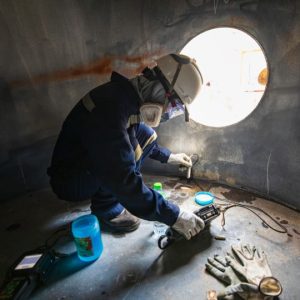
Old bottom paint can carry copper, tributyltin on genuinely old boats, and sometimes lead in the primers underneath. Blasting makes all of that airborne. This is not a wear-a-dust-mask-and-hope situation. OSHA abrasive blasting guidance covers respiratory protection, containment, and debris handling for a reason. If you are thinking about doing this yourself in your own driveway, read that page first, then decide honestly whether you have the setup for it.
When we will tell you not to blast it
If you have a small aluminum jon boat with one thin coat of paint and a free Saturday, a chemical stripper and a plastic scraper will probably get you there. We will say so. If the hull has soft spots, delamination, or structural blisters, blasting is not your first problem. The repair is, and you want a laminate specialist before you want us.
And if it is a slip-kept vessel that has to be hauled and blocked, that is a boatyard job with a lift, not a mobile job in your side yard. We run a mobile rig across Alachua County and the Newberry to Alachua corridor. Trailered boats, trailer frames, keels, steel structures, farm and shop equipment, that is our work. A forty-foot hull on stands at a marina is not. Knowing where that line sits has never cost us a customer we wanted.
After the paint is off, the clock starts
A properly stripped hull is a blank slate with an expiration date. Steel gets primed the same day, and there is no exception worth making in a Gainesville August. Fiberglass gets washed, dried, and inspected, and if you are going back to antifouling you want a barrier coat that actually matches the system going over it.
Mixing incompatible coating systems is the single most common reason a fresh bottom job fails inside one season, and it has nothing at all to do with how well the paint came off. Do it in the right order and you will not think about the bottom of that boat for years. Skip a step and you will be reading this article again next spring.
Need sandblasting in Gainesville or nearby? Call (352) 663-1129 for a free on-site estimate. You will reach someone who actually does the work.