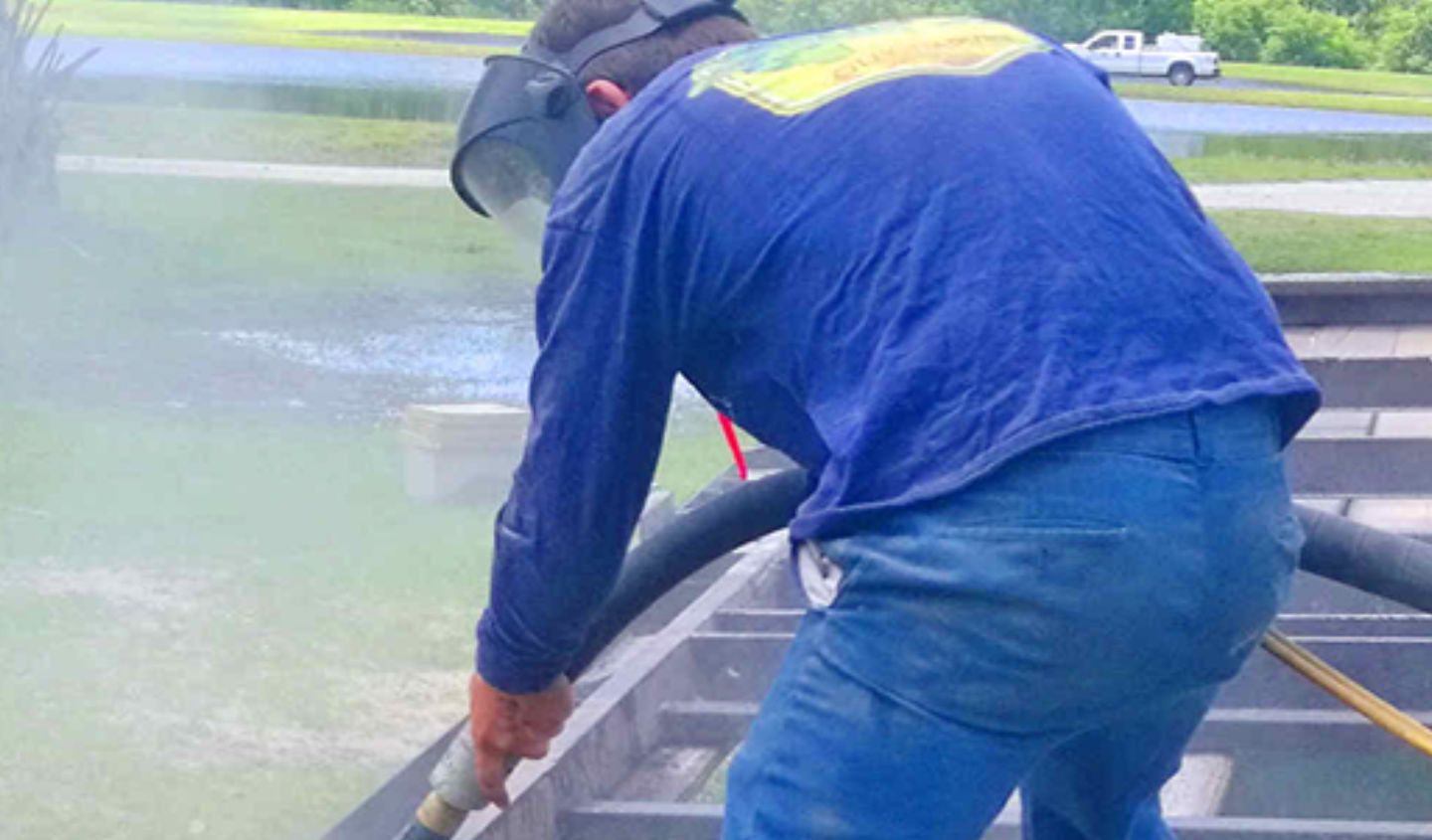
The paint on your garage floor is lifting in sheets. Or the stripe job on the warehouse slab has gone chalky and gray. Or someone painted the porch steps a color you never would have picked, and now it is peeling in curls the size of a quarter. Whatever the story, you want it off, and you want the concrete underneath to look like concrete again. Concrete paint removal is one of the most common jobs we get in Alachua County, and it is also one of the easiest to get wrong.
Here is the short answer. Blasting removes paint from concrete faster and cleaner than any other method, but only if the media, the pressure, and the cleanup are matched to the slab you actually have. The rest of this post covers six rules we follow on every job, plus the honest cases where you should not hire us at all.
Rule 1: Find Out What You Are Removing First
Not all paint on concrete is the same product, and the coating decides the method. A thin latex porch paint comes off with light blasting in an afternoon. A two-part epoxy floor system, cured for ten years in a shop with forklift traffic, is a different animal. Traffic paint, masonry sealer, acrylic floor stain, and old oil-based enamel each behave differently under abrasive.
We start every job by scraping a small test patch and looking at how the coating breaks. Does it flake, smear, or powder? Is there more than one layer? Is it bonded all the way down, or hollow underneath? That patch tells us more in two minutes than a phone description can. It also tells us whether the paint is the real problem. Sometimes the coating is peeling because water is pushing up through the slab, and no amount of blasting fixes that.
Rule 2: Know the Age of the Building Before You Touch It
If the structure was built before 1978, assume there may be lead in the paint until a test says otherwise. Painted block walls, old pool decks, and steps at older Gainesville homes near the university are the usual suspects. Lead paint is not a reason to panic, but it is a reason to stop and do it properly. The EPA lays out the rules for disturbing painted surfaces in its Renovation, Repair and Painting program, and OSHA covers the worker side of abrasive work in its abrasive blasting guidance.
If you are not sure, tell us when you call. A cheap lead test kit from a hardware store, or a lab sample, settles the question before any dust is made. We would rather lose a day to testing than put old lead paint into your yard and your lungs.
Rule 3: Pick the Method That Fits the Slab, Not the Brochure
There are three realistic ways to take paint off concrete with blasting equipment, and each has a place.
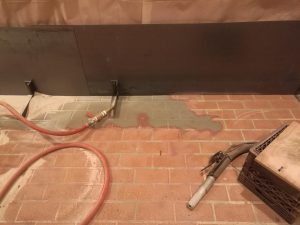
Dry abrasive blasting is the fastest and the most aggressive. It handles thick epoxy, multiple layers, and big open slabs, and it leaves a clean, even surface profile. The trade-off is dust, so it suits open areas and jobs where containment is practical.
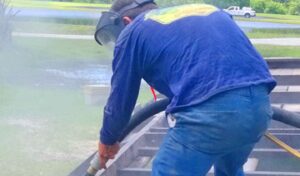
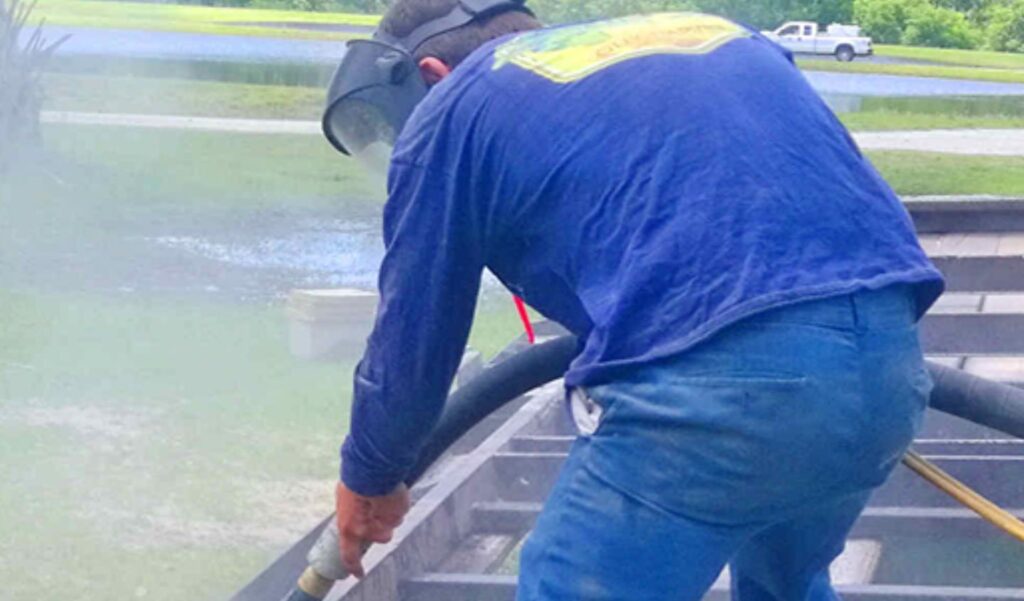
Dustless (wet) blasting cuts the airborne dust way down by adding water to the stream. It is the better choice near homes, along property lines, and around anything you do not want coated in gray film. The honest downside: you get a wet slurry that has to be cleaned up, and a damp slab cannot be coated until it dries out. Our green and dustless blasting page explains how that works in plain terms.
Light abrasive passes with a softer media are for thin paint on slabs you do not want to etch. Think decorative stamped concrete or a smooth patio where you want the paint gone without cutting into the cream. Softer media takes longer, but it protects the surface.
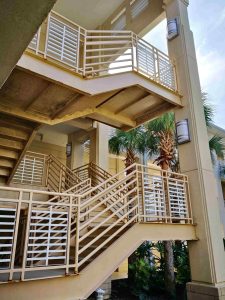
Our concrete sandblasting page covers the surfaces we work on, from driveways and loading docks to steps, walls, and shop floors.
Rule 4: Respect the Concrete You Are Uncovering
Concrete is not steel. It is a cement paste holding sand and stone together, and the top layer, often called the cream, is thinner than most people think. Blast too hard or sit in one spot too long and you cut through that cream and expose the aggregate. Sometimes that is exactly what you want, for example to give a new coating something to grip. Sometimes it ruins a smooth finish that took a finisher an afternoon to trowel.
Pressure, nozzle distance, and media size are the three knobs, and they get adjusted constantly as we move across a slab. Old patches, control joints, and spalled corners all need a lighter hand. Cracks get blown clean, not widened. If we see a hollow sound or crumbling edge, we mark it and tell you, because that is a repair job, not a paint job.
One more local fact: Florida slabs hold moisture. After a summer thunderstorm season, a slab can be damp all the way through even when the top feels dry. Paint applied over that moisture fails again within a year. We would rather wait a few days and test than hand you a pretty floor that blisters by spring.
Rule 5: Plan the Cleanup Before the Blast
The paint does not vanish. It turns into dust or slurry, mixed with spent media, and it has to go somewhere. For a dry job, that means containment, sweeping, and vacuuming. For a dustless job, it means collecting runoff so it does not wash into your lawn, a storm drain, or a neighbor’s yard. In Alachua County, with so many properties sitting on sandy soil close to creeks and sinkholes, runoff control is not a nice extra. It is part of the job.
Before we start, we walk the site with you and decide where everything will be staged, what gets covered, and where the debris gets collected. Windows, vehicles, landscaping beds, and door thresholds get protected. This is the boring part of the work, and it is also the part that determines whether the finished job looks professional or looks like a sandstorm hit your property.
Rule 6: Have the Next Coat Ready the Same Week
Bare, freshly blasted concrete is thirsty. It drinks up oil, water, and dirt in a hurry, and Florida humidity does not help. If the plan is to recoat, seal, or stain, schedule that work close behind the blasting while the surface is clean and open. A freshly profiled slab is exactly what epoxy, polyurethane, and masonry coatings want.
If you plan to leave the concrete bare, ask about a penetrating sealer so the first spilled drink or oil drip does not leave a permanent stain. And if the next step is paint, our painting services crew can coat the same surface we blasted, so nobody is pointing fingers if something fails. One crew, one set of hands from bare slab to finished floor.
When You Should Not Hire a Blaster
We will tell you straight when blasting is overkill. If you have a single small patch of peeling latex on a back step, a stiff wire brush, a scraper, and a Saturday morning may do the job. If the slab is failing structurally, spalled badly, or crumbling at the surface, you need a concrete repair contractor before you need us. And if the paint is actually trapping moisture that keeps coming up from below, removing it without fixing the water source just sets you up to repeat the problem.
If the job is bigger than a weekend and the coating is stubborn, that is where a mobile rig pays for itself. We bring the equipment to your driveway, shop, barn aisle, or loading dock, and we leave the place cleaner than we found it.
What to Expect When You Call
The process is simple. You describe the surface, the coating, and what you want the finished slab to look like. We come out, look at it, test a small patch, and tell you which method fits. You get a written quote you can read in full before anyone starts a compressor. Then we schedule the work, protect the site, blast, clean up, and walk the finished surface with you before we pack up.
Whether it is a residential driveway off Archer Road, a shop floor out toward Newberry, or a storefront slab near campus, the same six rules apply. Get the coating identified, test for lead where age says you should, choose a method that suits the concrete, protect the cream, manage the mess, and be ready for the next coat. Do that, and concrete paint removal goes from a headache to a one-day job.
Need sandblasting in Gainesville or nearby? Call (352) 663-1129 for a free on-site estimate. You will reach someone who actually does the work. You can also send us your project details and we will get back to you.