Sandblasting brick fireplace surrounds is one of those jobs people call us about after the paint has already failed them twice. Somebody rolled latex over a 1960s firebox surround in a Duckpond bungalow, it looked fine for a year, and now it is peeling off in sheets like sunburned skin. Stripping interior brick is very doable, and sandblasting brick fireplace walls is work we do in Gainesville homes every month. But it is also the job where the difference between a beautiful raw-brick accent wall and a chewed-up mess is entirely in the media choice and the pressure. So here is the honest version, from somebody who runs the nozzle.
1. First, find out what your brick actually is
Not all brick takes blasting the same way. Old Florida brick — and a lot of what is sitting in Gainesville homes built before the 1970s — is soft-fired. It was cooked at lower temperatures, and the hard outer skin, what masons call the fire skin, is thin. That skin is the only thing standing between your brick and weather, moisture, and crumbling. Blow through it and the brick starts shedding dust forever.
Modern extruded brick is harder and much more forgiving. Same goes for most commercial brick around campus and the newer Newberry and Haile subdivisions.
The test is simple and you can do it yourself. Drag a key across an unpainted spot in a closet or behind the mantel. If it leaves a scratch and a little pile of red dust, you have soft brick and this becomes a light-touch job. If the key skates off, you have hard brick and we have more room to work.
2. Know what you are removing before you turn on the compressor
Paint is not the only thing that ends up on an interior fireplace. We regularly find:
- Latex or acrylic wall paint — the most common, and the easiest to take off.
- Oil-based enamel — tougher, especially if it was applied in the 1970s and has been baking near a firebox ever since.
- Whitewash or limewash — sometimes people want this kept. Say so before we start, because it comes off faster than paint.
- Soot and creosote — inside the firebox itself, this is a different animal and a different cleaning method.
- Mastic and adhesive — from a stone or tile veneer somebody glued on and later ripped off.
Here is the honest part most people skip: if the house was built before 1978, that paint may contain lead. That is not a maybe, that is a legal reality. Under the EPA Renovation, Repair and Painting rule, disturbing lead paint in a home requires certified containment practices. We are not going to dry blast lead paint inside your living room and hand you a dust problem. There are contained and wet methods for that, and we will tell you which one your fireplace needs.
3. Sandblasting a brick fireplace means low pressure and soft media
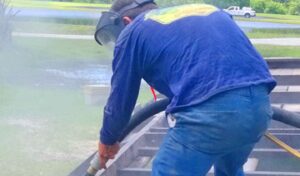
This is the whole ballgame. The mental picture most people have of sandblasting — a guy in a hood blowing rust off a trailer frame at 100 PSI — is the opposite of what an interior fireplace wants.
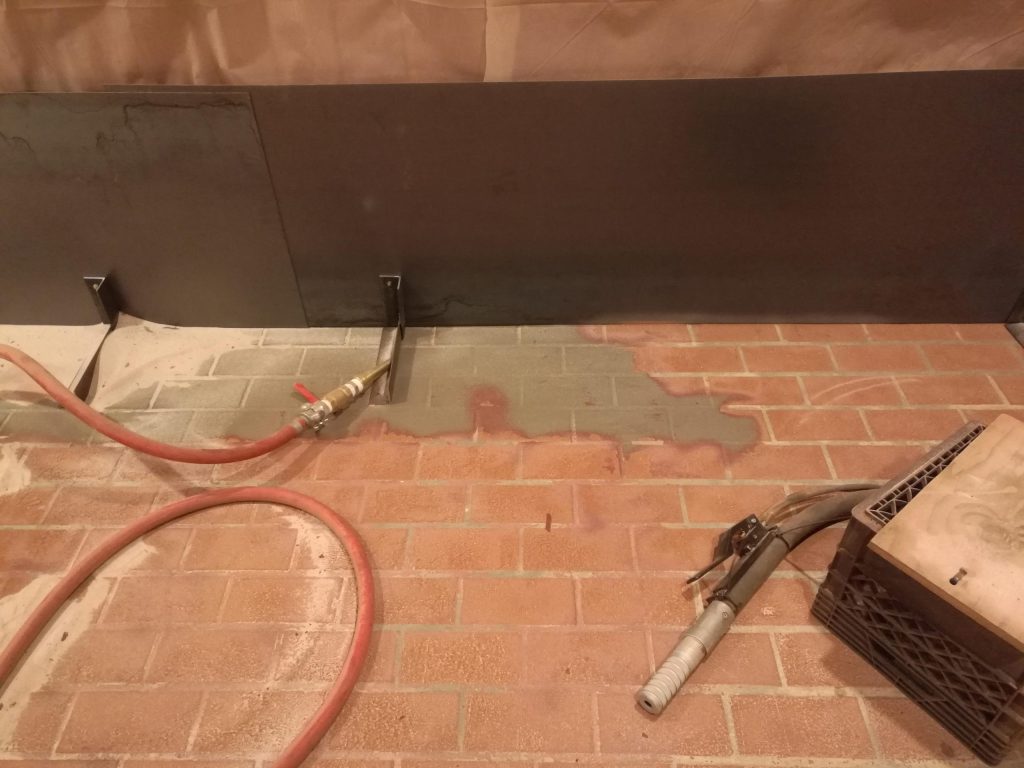
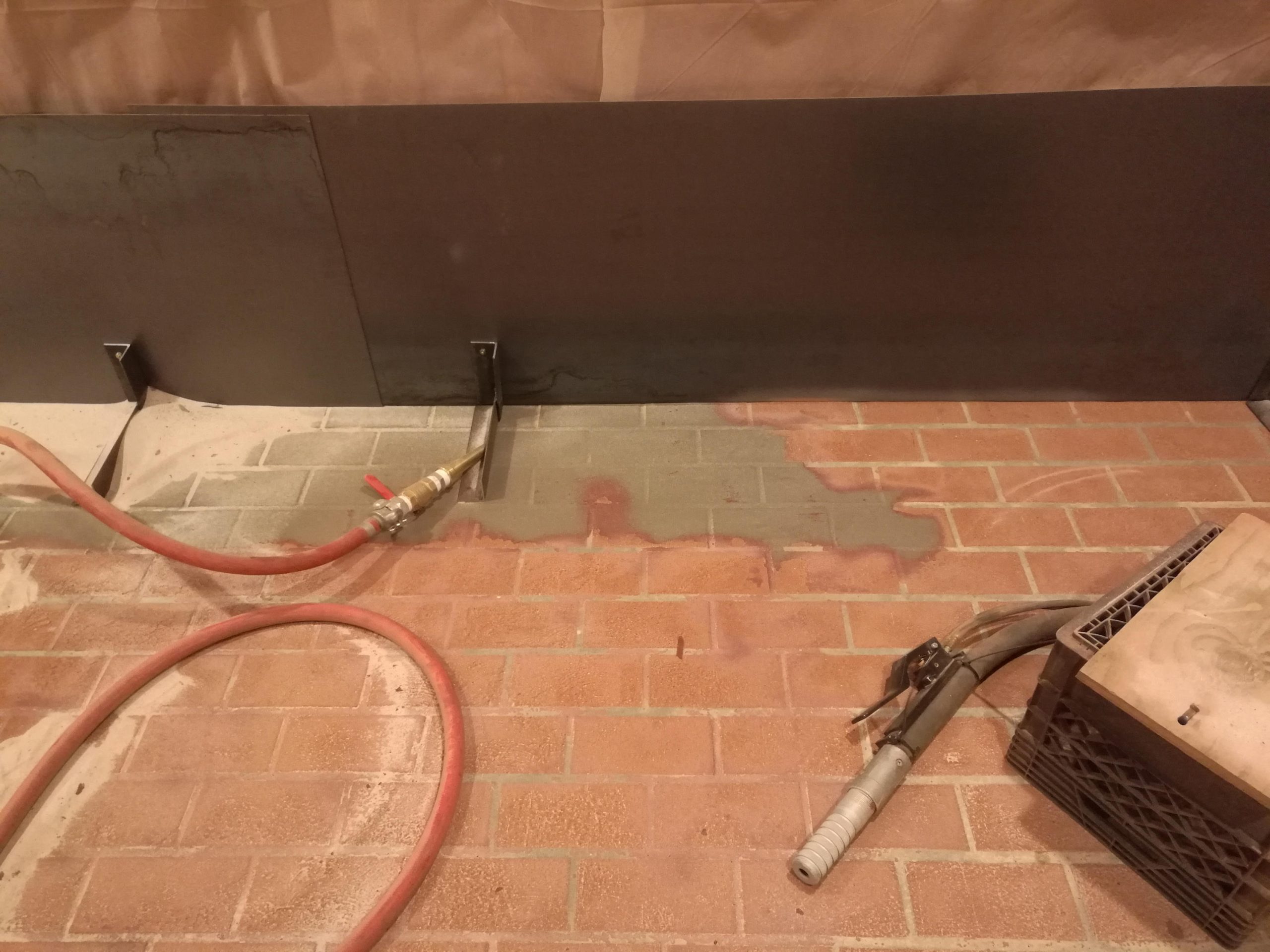
For interior brick we drop the pressure way down, often into the 20 to 40 PSI range, and we switch media. Crushed glass, fine garnet, or baking soda all work depending on the brick and the coating. Soda is the gentlest option and it rinses away with water, which matters when you are working three feet from a hardwood floor. It is slower. It costs more. On soft brick it is often the only right answer.
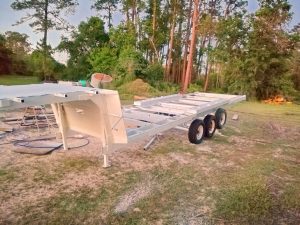
Coal slag and hard angular abrasives have their place, but not on a sandblasting brick fireplace job, and we use them every day on steel. Inside a house, on 70-year-old brick, they are a mistake. We will tell you straight which one your job wants, and if the honest answer is a chemical stripper and a stiff brush instead of our rig, we will tell you that too. We have talked more than one homeowner out of this job.
4. Containment is most of the work
People underestimate this every single time. The blasting on an average fireplace surround might be three to five hours. The setup can be just as long.
Interior work means full poly containment — floors, adjacent walls, ceiling, the doorway into the rest of the house, HVAC returns taped off so you are not pumping brick dust through every vent in the place. Negative air with HEPA filtration. Drop cloths on anything that cannot move. If you have heart pine floors, they get protected twice.
Anyone who quotes you an interior fireplace blast and does not walk through containment with you is either doing it outside your house or doing it badly. Ask the question.
5. Expect the mortar to be the weak link
Brick is usually harder than the mortar holding it. On an older Gainesville chimney that has had decades of Florida humidity cycling through it, the mortar joints can be soft, sandy, and ready to give up.
Blasting will find every one of those bad joints. That is not the blaster failing — that is the blaster revealing a repointing job that was already needed. Sometimes that is welcome news. Sometimes it means you finish the paint removal and then call a mason for tuckpointing before you seal anything.
On any sandblasting brick fireplace job we walk the wall with you before we start and point out joints we expect to lose. No surprises halfway through the afternoon.
6. Raw brick after blasting is thirsty — plan the finish
Once the paint is off, you have bare, open, porous masonry. In Gainesville, with the humidity we run most of the year, that matters more than it would in a dry climate.
Your three realistic options:
- Leave it raw. Honest and beautiful on good hard brick. It will shed a little dust and it will absorb any spill nearby.
- Breathable masonry sealer. Our usual recommendation. It cuts the dusting, lets moisture vapor escape, and does not turn the brick shiny.
- Film-forming sealer or paint. Fine if you want a specific look, but understand you are putting a coating back on brick you just paid to strip. And a non-breathable film can trap moisture in the masonry, which is the same mechanism that made the old paint fail.
On a working firebox, nothing goes on the interior firebrick. Sealers and heat do not mix.
7. Know when a fireplace is the wrong candidate
We do not take every one of these jobs. Skip the blasting if:
- The brick is crumbling and shedding before you touch it — you need masonry repair, not paint removal.
- It is a thin brick veneer glued to drywall. Blasting will find the adhesive and the panel behind it.
- The chimney has active water intrusion. Fix the cap and flashing first, or you will be stripping it again.
- Your real goal is a smooth, uniform painted look. Then the fix is proper prep and the right masonry primer — not a strip-down.
If a wire brush and a Saturday will do, we will tell you. The honest no earns the next yes.
What a sandblasting brick fireplace job looks like on the day
We come out, look at the brick, scratch-test it, check the age of the house, and talk about lead. We put together a containment plan and tell you how long we will be in your living room. On the day, we mask, we blast at the lowest pressure that will move the coating, we HEPA vacuum everything, and we pull the plastic. Same crew, start to finish — we do the masonry blasting and the follow-up coating work, so nobody is pointing fingers about whose prep failed.
If you want more on how we handle masonry, our brick and masonry sandblasting in Gainesville page covers exterior walls and commercial work. For the low-dust setups we use on delicate interior jobs, read about dustless and green blasting in Gainesville. If your project also involves a slab or hearth extension, concrete sandblasting in Gainesville is the related service. Anyone working around abrasive blasting should also know the safety basics laid out by OSHA.
Need sandblasting in Gainesville or nearby? Call (352) 663-1129 for a free on-site estimate. You will reach someone who actually does the work.