Drive the 441 corridor between Gainesville and Alachua, or any farm road out past Newberry, and you will see it: a disc harrow parked in the weeds going orange, a bush hog with more scale than paint, a tractor that has been “next spring’s project” for four springs. Florida does that to iron. Farm equipment rust removal is a big slice of our work here in Alachua County, and after enough tractors, implements, and stock trailers, we can tell you exactly what works, what wastes your Saturday, and when the honest answer is to leave the thing in the fence row. Here are the seven steps, in the order we actually do them.
Why Farm Equipment Rusts So Fast in North Florida
Our humidity sits above 70 percent most mornings. Add fog rolling off the pastures, afternoon storms half the year, and equipment that lives outside because the barn is full of hay, and steel never really gets a dry day. Then there is what the equipment touches. Fertilizer, lime, and manure all leave soluble salts on the metal, and salts pull moisture straight out of the air and hold it against the steel. That is why a spreader rots faster than a mower deck doing the same hours, and why the equipment parked closest to the manure pile always looks the worst. Farm equipment rust removal in this climate is not cosmetic — it is structural maintenance you are either doing on purpose or losing by default.
Paint alone will not fix it. If you spray over rust, scale, and salts, you have sealed the problem underneath a fresh coat, and it will bubble back through in a season. The fix is getting down to clean metal first. That is the whole job.
Step 1: Decide What Is Worth Saving — Sometimes the Answer Is Nothing
Here is the honest part most people skip. Not every implement deserves the work. If the sheet metal is perforated, if the frame has rot you can push a screwdriver through, or if a working replacement costs less than the repair, we will tell you that in the driveway. We would rather lose the job than blast a piece of equipment that should have been sold for scrap. On the other hand, a cast iron gearbox housing, a heavy trailer frame, or a 40-year-old tractor with good bones? Those clean up beautifully. Old iron is usually thicker than anything you can buy new.
Step 2: Degrease First, Blast Second
Farm equipment carries decades of grease, hydraulic oil, and diesel film. Abrasive does not cut through grease — it bounces off it, or worse, drives it into the surface where it will wreck your new paint’s adhesion. So the gearboxes, PTO areas, and pivot points get degreased before any media flies. We also pull or mask shields, decals worth keeping, hydraulic cylinders, and anything with a seal. Ten minutes of masking saves a rebuilt cylinder.
Step 3: Match the Abrasive to the Metal
A tractor is three different jobs wearing one coat of paint. The cast iron block and gearbox housings can take an aggressive media and want a deep anchor profile. The frame and drawbar are heavy steel — same story. But the sheet metal hood and fenders are thin, and hitting them with coarse slag at full pressure will warp them like a potato chip. We run different media and different pressures on different parts of the same machine, and on delicate panels we may switch to dustless blasting, which runs cooler and gentler on thin metal. Same price either way — we pick by the job, never the invoice.
Step 4: Blast to Clean Metal, Not Just “Better”
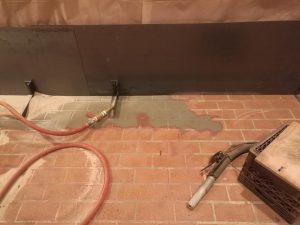
There is a temptation to stop when the equipment looks better. Do not. Rust left in the pits keeps working under the new paint. We blast to a commercial-grade finish — clean metal with the pitting opened up and the scale gone — the same standard we hold on structural work with our metal sandblasting service in Gainesville. Blasting also leaves a profile, a fine texture on the steel that primer physically grips. Paint on smooth, glossy old enamel peels. Paint on a properly profiled surface has to be sanded off.
A word on safety, because it matters on a farm where kids and animals are around: abrasive blasting throws dust, spent media, and old coating debris, and OSHA treats it as a serious hazard for good reason. We contain the work area, keep bystanders and livestock clear, and clean up the spent media when we are done. If the old paint might contain lead — common on pre-1980s equipment — that changes the containment plan, and we handle it accordingly.
Step 5: Prime Before Supper — Flash Rust Is Not a Rumor
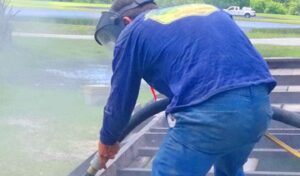
Bare steel in Alachua County starts flash rusting in hours, sometimes faster on a humid August afternoon. That orange bloom shows up before you have finished loading the equipment back on the trailer. This is the single biggest reason DIY blasting jobs fail: the metal gets blasted on Saturday and primed “next weekend,” and by then the surface is already compromised. Our rule is simple — steel that gets blasted today gets primer today. One crew, one visit: we blast in the morning and prime in the afternoon, which is exactly why we run blasting and painting and coating services as one operation instead of pointing fingers between two contractors.
Step 6: Coat for Florida, Not for the Brochure
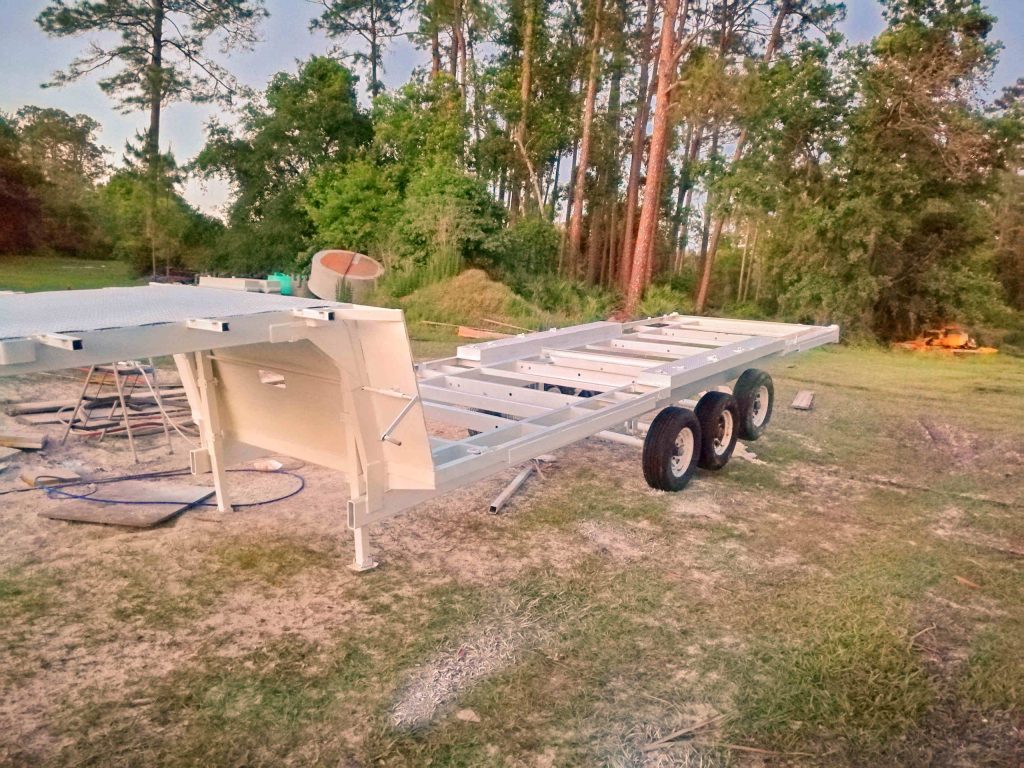
The coating system matters as much as the prep. For farm equipment that lives outdoors here, we like a zinc-rich or rust-inhibitive primer for the sacrificial protection, followed by a direct-to-metal enamel or urethane topcoat that can take UV, rain, and the occasional run-in with a gatepost. Implement red and Ford gray are not hard to match. What you should not do is put one thin rattle-can coat over good blasting work — that is a $40 roof on a well-built house. Two proper coats over clean, profiled steel is what buys you the next decade.
Horse Farms, Gates, and the Small Iron in Between
Alachua County is horse country as much as row-crop country, and horse farms carry their own inventory of rusting steel: pipe gates, stall fronts, hay rings, round-pen panels, wash-rack fittings, and the hardware holding miles of board fence together. None of those justify a service call on their own. Batched together, they absolutely do. We set up once in the barn aisle or the equipment yard and work through the pile — gates leaned against the fence line, panels laid out on blocks, the hay rings that have been sitting in the same wet spot since 2019. Everything gets blasted, primed, and topcoated in the same visit. Farm managers around Newberry and Jonesville have figured this math out: one mobile setup on a batch of small iron costs a fraction of replacing it all at the co-op, and the old pipe is heavier gauge than the new stuff anyway.
Step 7: Keep Ahead of It
After a spreader or sprayer runs, rinse it. Those fertilizer salts are the most corrosive thing your equipment touches all year. Touch up chips before the orange ring shows up around them. If you can park iron under a roof, do it — even an open pole barn cuts the corrosion rate dramatically because the equipment stops collecting dew every night. None of this is complicated. It is just the difference between doing this job once and doing it again in three years.
When You Do Not Need Us
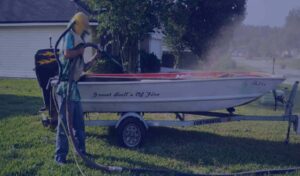
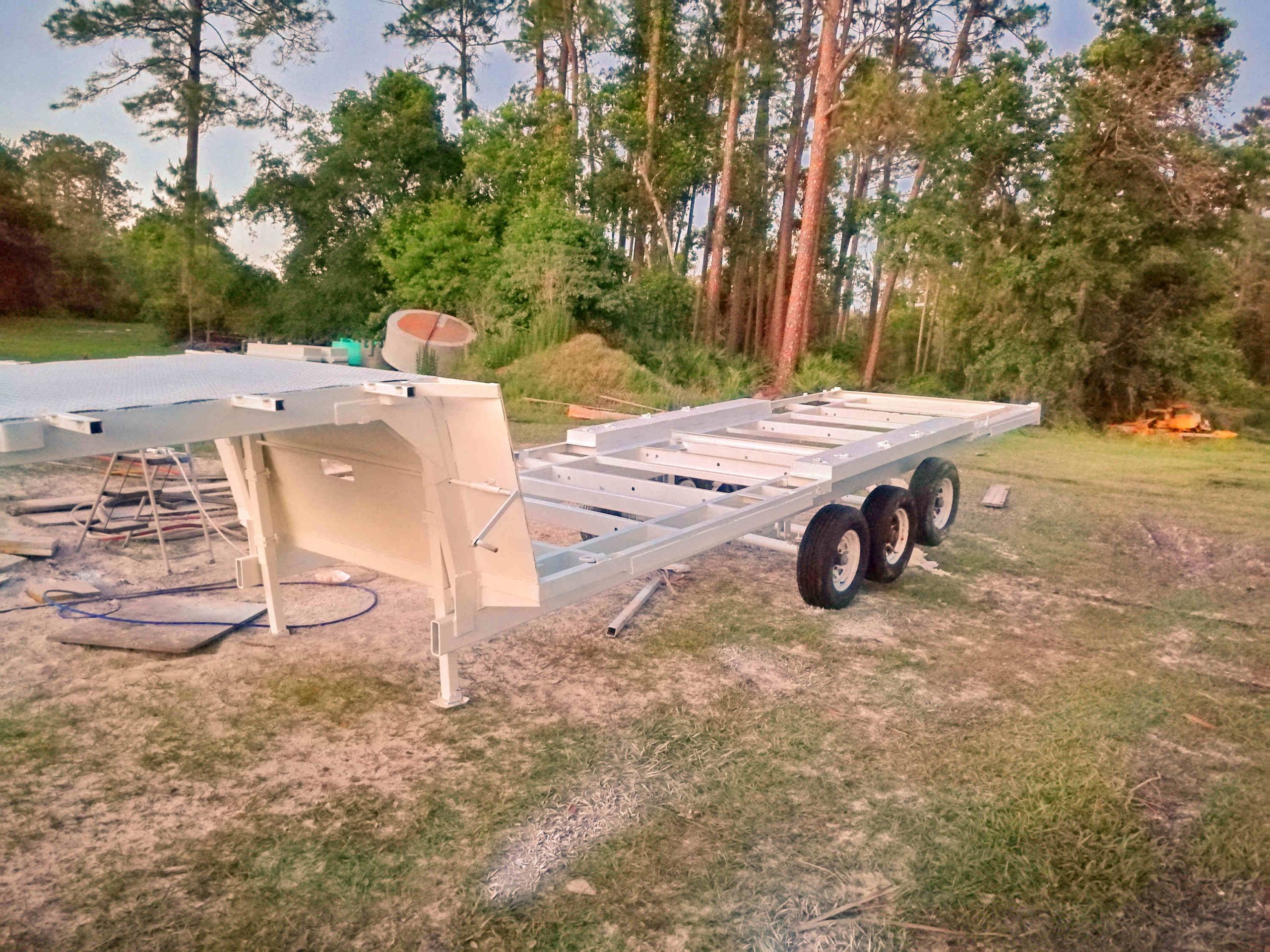
Straight talk: if it is one surface-rusted mower deck and you own a wire brush, an angle grinder, and a free Saturday, you can handle that yourself, and we will tell you so on the phone. Where mobile blasting earns its keep is the stuff you cannot practically haul or hand-strip — a tractor, a full set of implements, a 30-foot stock trailer, a batch of gates and hay rings. Our rig comes to your barn aisle, blasts everything in one setup, and primes it the same day. Most farm calls in the Gainesville, Newberry, and Alachua area are a one-day turnaround, and you deal with the same crew start to finish. Bigger jobs — a tractor plus a full implement lineup, or a trailer that needs frame work — might run two days, and we will tell you which it is before we ever unload a hose.
Need sandblasting in Gainesville or nearby? Call (352) 663-1129 for a free on-site estimate. You will reach someone who actually does the work.