Comparing rust removal methods usually starts the same way: something steel — a trailer, a railing, a piece of equipment, a staircase — has gone orange, and you want to know whether to grab a wire brush, pour on a chemical, or call a blasting crew. Each rust removal method has a legitimate place, and each has a failure mode that wastes your weekend or your money when it is pushed past its limits. This guide compares the four main approaches — wire brushing and power tools, chemical removers and converters, electrolysis, and abrasive blasting — and tells you honestly which one fits light surface rust versus heavy corrosion here in humid North Central Florida.
The Four Main Rust Removal Methods
1. Wire brushing and power tools. Hand brushes, drill-mounted wire wheels, flap discs, and grinders physically scrape rust off the surface. Cheap, available, and satisfying for small areas — but they only reach what the bristles touch. Pitting, seams, corners, and threads keep their rust, and aggressive grinding can thin or gouge the metal.
2. Chemical removers and converters. Acid-based removers (phosphoric, oxalic, citric) dissolve rust; converters react with it and turn it into a dark, paintable layer. They work without abrasion, which suits delicate parts — but they need dwell time, neutralizing, and disposal care, and converters leave the original surface contour, pits and all, under the new coating.
3. Electrolysis. A battery charger, washing soda, and a sacrificial anode pull rust off small parts in a tank. Gentle and thorough for hobby and restoration parts — and completely impractical for anything that does not fit in a bucket or tank.
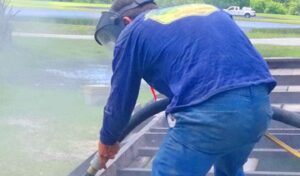
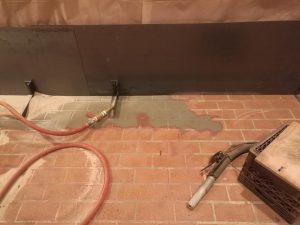
4. Abrasive blasting. Compressed air drives abrasive media against the steel, cutting away rust, mill scale, and old coatings together while leaving a textured profile that primer grips. It is the only method that handles large areas, deep pitting, and complex shapes in one pass — which is why industrial standards for coating preparation are written around it. See our metal sandblasting service for what this looks like in practice.
Method Comparison at a Glance
| Method | Best for | Weakness | Speed on large areas |
|---|---|---|---|
| Wire brushing / power tools | Small spots, touch-ups, flat accessible areas | Misses pits, seams, detail; can polish rust instead of removing it | Very slow |
| Chemical removers / converters | Delicate parts, tight budgets, light rust | Dwell time, rinsing, disposal; pits remain under coating | Slow |
| Electrolysis | Small parts, antiques, hardware | Tank-sized objects only | Not applicable |
| Abrasive blasting | Heavy corrosion, large areas, coating prep, complex shapes | Needs professional equipment and containment | Fast |
For Light Surface Rust
If the rust is a thin haze or light freckling on otherwise sound metal — a gate hinge, a patio chair, one section of railing — start small. A wire wheel or sanding followed by a quality rust-inhibiting primer handles most light jobs, and a chemical converter is a reasonable shortcut on areas you can not fully strip. The key on light rust is acting before Florida humidity turns freckles into scale: surface rust is a cosmetic fix this month and a structural project in a couple of summers.
For Heavy Corrosion
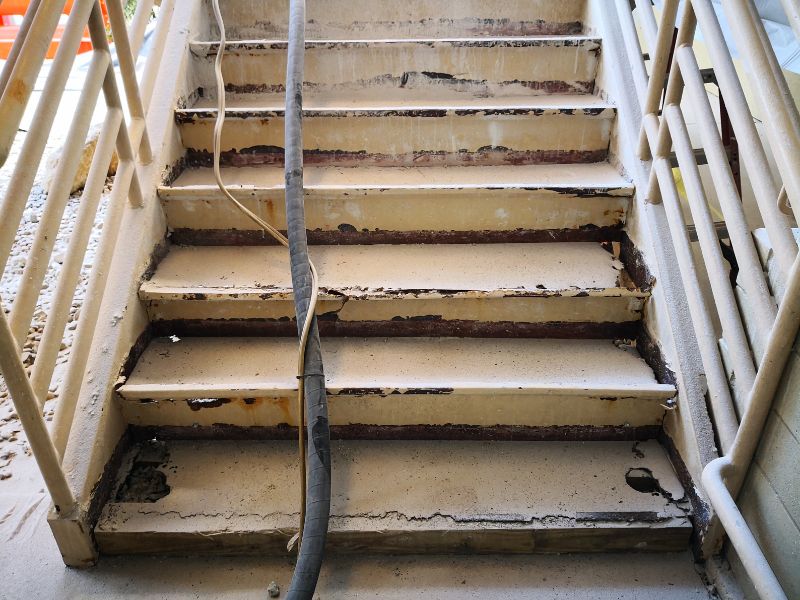
Once rust has scaled, flaked, or pitted the surface — trailers left outdoors, equipment that works in the weather, staircases and structural steel — the spot methods stop being honest options. Brushing knocks off the loose layer and leaves the bonded rust shining underneath; chemicals cannot reach through thick scale; and any paint applied over remaining corrosion fails from below. Blasting is the only method that takes heavily corroded steel back to clean, bare metal across the whole surface, including pits and seams, and operations are governed by OSHA abrasive blasting requirements for dust and operator protection — one of several reasons heavy rust work belongs with a professional crew. Costs and what drives them are covered in our sandblasting cost guide.
The Step Most People Skip: Long-Term Protection
Removing rust is half the job. Bare steel in our humidity starts flash rusting within hours, so the protection plan matters as much as the removal method. Professional practice is simple: blast to clean metal with the right profile, prime the same day, and build the coating system the primer specifies. That sequence — not the brand of paint — is what determines whether the steel stays clean for fifteen years or fifteen months. It is also why we pair blasting with our painting and protective coating services under one contractor: no gap between clean steel and sealed steel.
Rust Removal FAQs
Can I just paint over rust with a rust-encapsulating paint? On light, tight rust, encapsulators can buy time. On scale or pitting they fail — corrosion keeps working underneath, and the coating lifts off in sheets along with your money.
Does blasting damage the metal? No — media and pressure are matched to the steel. Thin panels get gentler media and technique; structural steel takes aggressive media that leaves the profile coatings require.
What about rust in places I cannot see, like inside seams? That is exactly where brushing and chemicals fall short and where blasting earns its cost: the abrasive stream reaches seams, corners, and detail at full effectiveness.
Is sandblasting overkill for a small part? Often, yes — a small bracket or a set of bolts is a wire-wheel or electrolysis job. The math flips as soon as the part is large, pitted, or destined for a coating you want to last.
Why Rust Moves Faster in North Central Florida
Rust is electrochemistry, and our climate feeds it everything it wants: humidity that keeps a microscopic film of moisture on steel most of the year, daily summer storms, and warm temperatures that speed the reaction. Coastal salt is worse, but even inland around Gainesville and Alachua County, unprotected steel corrodes noticeably faster than national guides assume. Practically, that means three things. First, light rust does not stay light here — the window between cosmetic and structural is shorter. Second, bare metal cannot wait for the weekend: once steel is stripped by any method, it needs primer the same day or flash rust restarts the cycle. Third, coating quality matters more than in dry climates — a budget rattle-can finish over good prep will still fail years before an industrial coating over the same prep.
Matching the Method to the Job: Quick Scenarios
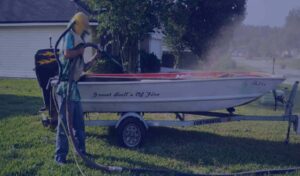
A rusty utility trailer. Scale on the frame, pitting on the fenders, rust in every seam and weld. Blasting is the only method that gets all of it; we strip trailers regularly and prime them the same day.
A wrought-iron gate with light freckling. Wire wheel the spots, feather the edges, spot-prime with a rust-inhibiting primer, topcoat. A blasting crew is overkill — unless the gate is ornate and the rust is in detail you cannot reach, where gentle media blasting shines.
Antique hardware or small machine parts. Electrolysis or a citric-acid soak preserves detail and original surfaces. Patience beats aggression on irreplaceable parts.
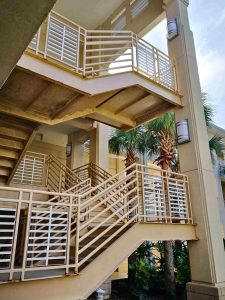
A steel staircase or structural member. This is coating-spec territory: blast to the required cleanliness and profile, prime immediately, build the system. Anything less repeats the failure that caused the problem. See our steel staircase project approach for how this is sequenced in practice.
Equipment that works outdoors. Farm and construction machinery collects both rust and hardened buildup; blasting handles both in one pass and leaves surfaces ready for the tough coatings this equipment needs.
The honest pattern across all of these: hand methods for small and accessible, chemistry for delicate, blasting for large, pitted, or coating-critical. When a job sits on the line between categories, a quick photo or a free on-site look settles it — and we will tell you plainly when a wire wheel and a Saturday afternoon are all you need.
Prevention: The Cheapest Rust Strategy
Once steel is clean and coated, a little maintenance keeps it that way. Rinse outdoor steel a few times a year to knock off the grime that traps moisture against the surface. Touch up chips and scratches promptly — every coating failure starts at a small break that lets water reach bare metal. Keep drainage clear so water never pools on treads, ledges, or frame rails, and check fasteners and seams each spring, since joints corrode first. On equipment and trailers, a fresh topcoat every few years costs a fraction of another full strip. The pattern is the same one that runs through every method in this guide: rust is cheap to stop early and expensive to stop late. Clean steel, a sound coating, and an annual walk-around will keep most Gainesville properties off the heavy-corrosion list entirely — and when something does get past you, you now know exactly which removal method the job calls for.
Need sandblasting in Gainesville or nearby? Call 352-663-1129 for a free on-site estimate.