There are two ways to strip a surface clean, and the internet has made a saint out of one of them. If you are weighing dustless blasting vs dry sandblasting for a job in Gainesville, you have probably been told dustless is the obvious modern choice and dry blasting belongs in the past. We run both every week, and we owe you the parts the marketing leaves out – the trade-offs that actually decide which one belongs on your job.
First, set the record straight: in dustless blasting vs dry sandblasting, neither one cleans better than the other. The abrasive does the cutting, and the same media at the same pressure removes the same rust and paint whether or not there is water in the line. The only real difference is what happens to the dust. So the decision is never about how clean you get – it is about which trade-off fits your site, your surface, and what happens next.
Dustless Blasting vs Dry Sandblasting: What Actually Changes
Dry sandblasting drives abrasive with compressed air and kicks up a cloud of dust. Dustless folds water into the stream so the spent media and dust fall at the workpiece instead of drifting across the yard and the neighborhood. One method hands you airborne dust to manage; the other hands you water and the mud it makes. That single swap drives every pro and every con worth knowing, so it is worth understanding before you decide.
It also helps to drop the marketing numbers. You will see claims that dustless cuts airborne dust by some exact percentage. The real point is simpler: dustless keeps the dust down, dry does not, and that is the entire reason to choose one over the other. The cleaning is a wash.
The Cons of Dustless the Brochures Skip
Water solves the dust problem by creating a different one: mud. The spent media comes off as a wet slurry that settles into seams, threads, weld joints, and tight corners. After a dry blast, you can chase that leftover grit out of every crevice with compressed air and walk away with a genuinely clean part. After a dustless blast, that grit is in there wet and stubborn, and on anything intricate – a railing, a trailer frame, a piece of equipment with a hundred pockets – getting it back out is slow, frustrating work that the glossy write-ups never mention.
The slurry is also a cleanup and disposal job in its own right. Dry dust you sweep and vacuum; wet media has to be contained, collected off the ground, and hauled, and it does not politely stay where you left it if the job runs long or the weather turns.
What Goes Wrong When You Coat Over Dustless Residue
This is the expensive one, and it is the reason an experienced crew treats dustless metal differently. Freshly dustless-blasted steel is left wearing a thin film of damp, salty residue, and you do not paint over it. Do it anyway and three things go wrong, often all at once.
First, adhesion fails: the coating grabs the loose mud instead of biting into the steel, so it lifts and peels in sheets. Second, the moisture trapped under the film flash-rusts the bare metal within hours – in Florida humidity that clock runs fast – and the new rust pushes the coating off from underneath as a field of blisters. Third, the soluble salts left in that residue are hygroscopic; they pull moisture straight through the coating by osmosis and raise blisters even on a film that looked perfect the day it went on. None of these show up immediately, which is exactly why people get burned: the paint looks great for a few weeks, then starts failing, and the blame lands on the paint instead of the prep.
It is not only our opinion. Open the technical data sheet on most quality industrial primers and it will specify a clean, dry, salt-free surface – and the two-part epoxies and zinc-rich primers people reach for on serious steel are the least forgiving of all. Freshly dustless-blasted metal does not meet that spec until it has been dried and washed down and, sometimes, given a light pass to knock the surface back open. That is real labor and real time, and any honest shop builds it into the plan rather than pretending the surface is ready straight out of the nozzle.
[Owner note: name the specific primers or paints you have watched fail over dustless here so we can cite real experience.]
The Pros – and Where Dustless Genuinely Wins
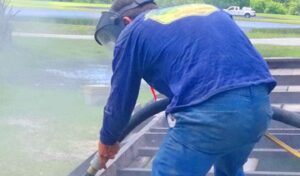
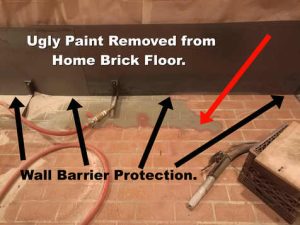
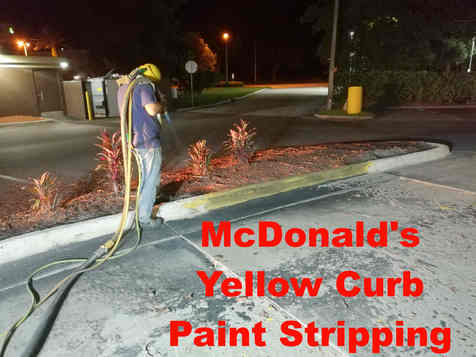
None of this means dustless is bad. It means dustless is a tool, and tools have a right and wrong use. When the work sits near homes, schools, a hospital, a storefront, an occupied office, or anywhere a drifting dust plume is simply not acceptable, the water suppression is exactly what the job needs – and trying to dry blast there would be the wrong call. That is the whole reason we keep a dustless rig ready. Our green dustless blasting exists for precisely those sensitive, populated, dust-can’t-travel sites, and on those jobs the extra cleanup is a price well worth paying.
When Dry Sandblasting Is the Smarter Pick
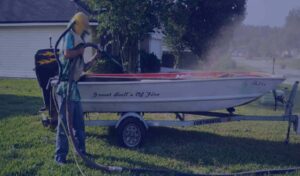
Out in the open the math flips. A trailer on a pad, structural steel with nobody downwind, equipment in a fenced yard, a fabrication that has to be primed today – dry blasting is faster, leaves a clean dry surface you can coat immediately, and skips the dry-and-wash detour entirely. On parts full of nooks and crannies, dry usually wins too, because we can blow them out spotless instead of fighting packed mud. A good portion of the time, the honest recommendation is dry, and we will tell you so even though dustless is the trendier word.
How We Decide on Your Specific Job
When we walk a job, the method picks itself from a few simple questions. Where is the work, and who or what is downwind? How soon does it need a coating, and what coating is going on? How intricate is the piece? Is there livestock, a pool, a screen enclosure, or a neighbor close enough to care? Answer those and the choice is usually obvious – and if it is genuinely a toss-up, we default to whatever gets you a longer-lasting result for the same money.
We Run Both – at the Same Price
Here is the part that should settle it: we offer dry and dustless, and one does not cost a dollar more than the other. There is no premium for the green option and no discount for the old-fashioned one. We pick the method by your surroundings and your surface, tell you straight which one your job wants, and prime it the same day with our in-house coating crew so nothing flash-rusts during the handoff. That is the advantage of one crew owning both the strip and the coat – there is no finger-pointing when the prep and the paint are the same people. For the safety standards behind all of it, the OSHA abrasive blasting guidelines are what we work to on every job.
So when someone tells you dustless is simply better, the honest answer is: better at keeping dust down, identical at cleaning, and worse right before paint unless you do the extra work. Know that going in and you will make the right call – or you can just let us make it with you.
Need sandblasting in Gainesville or nearby? Call 352-663-1129 for a free on-site estimate.