SSPC surface preparation standards show up in coating data sheets, engineering specs, and contractor quotes — SP-6, SP-10, near-white, commercial blast — and if you are not in the coatings industry, they read like code. They are worth decoding, because these standards are the difference between a coating warranty that holds and one that is void before the paint dries. This guide explains why surface cleanliness is graded at all, what each common SSPC standard actually means, which level different projects need, and the questions that tell you whether a contractor genuinely works to these standards or just borrows the vocabulary.
Why Surface Cleanliness Is Graded
Coatings fail from underneath. Rust, mill scale, old paint, oil, and salts left on steel keep working after the new coating goes on, and the coating peels from the contamination outward. Coating manufacturers know precisely how clean a surface must be for their product to achieve its rated life — so the industry needed a shared language to define “clean.” That language came from the Steel Structures Painting Council, later the Society for Protective Coatings (SSPC), whose standards — now maintained under AMPP, the Association for Materials Protection and Performance, after SSPC merged with NACE in 2021 — grade exactly how much contamination may remain on a prepared surface. When a data sheet says the primer requires SP-10, that is not a suggestion; it is a warranty condition.
The SSPC Standards, From Mildest to Strictest
SP-1 — Solvent Cleaning. Removing oil, grease, and salts with solvents or detergents. Not a blast standard at all — but it comes first in nearly every spec, because blasting over oil just drives contamination into the profile.
SP-2 and SP-3 — Hand and Power Tool Cleaning. Wire brushes, scrapers, and grinders removing loose rust and paint. Tightly adhering material may remain. Acceptable for maintenance touch-ups and mild service environments — not for immersion, chemicals, or long-life systems.
SP-7 — Brush-Off Blast. The lightest blast standard: removes loose material and roughens the surface, leaving tightly adherent rust, scale, and old coating. Used where the existing coating is mostly sound or service demands are light.
SP-6 — Commercial Blast. The general-industry workhorse. At least two-thirds of each square inch must be free of all visible residues; staining may remain on the rest. Typical for tanks, structural steel, and equipment in normal atmospheric service.
SP-10 — Near-White Metal Blast. At least 95 percent of each square inch free of all visible rust, scale, paint, and stains. Standard for harsh service: marine, chemical exposure, high humidity — and the level many high-performance primers demand.
SP-5 — White Metal Blast. One hundred percent free of visible contamination — the strictest level, reserved for immersion service, severe chemical environments, and critical linings.
Two more worth knowing: SP-11 (power tool cleaning to bare metal, for spots where blasting is impossible) and the old NACE numbers that mean the same things — NACE 1 is white metal, NACE 2 near-white, NACE 3 commercial, NACE 4 brush-off. Alongside cleanliness, specs also call out surface profile — the measured roughness the blast leaves — because a coating needs both a clean surface and the right texture to anchor into, as we covered in our epoxy prep guide for concrete.
What Standard Does Your Project Actually Need?
The honest answer: whatever the coating data sheet says — that line outranks opinion, including ours. As a practical map, though: interior steel in dry service and general fabrication usually lives at SP-6. Anything outdoors in Florida humidity that you want to last — trailers, structural steel, equipment, staircases — deserves SP-6 at minimum and often SP-10, because our climate is closer to coastal service than the national average assumes. Immersion — tanks, below waterline, chemical containment — is SP-10 to SP-5 territory and engineer-specified. Most residential work — gates, furniture, decorative iron — does not need a named standard at all; it needs clean, bright metal and a same-day primer, which is what a good metal sandblasting job delivers by default.
How Contractors Use These Standards
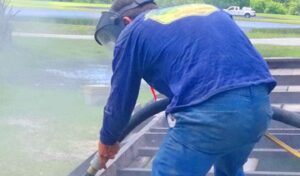
On a spec job, the standard governs everything: media and pressure are chosen to reach the cleanliness and profile, work is checked visually against published reference photographs, profile is measured, and — critically — primer goes on before the surface degrades. That last point matters most here: a freshly blasted SP-10 surface left overnight in Gainesville humidity is no longer SP-10 by morning. Flash rust does not ask permission. This is why we sequence blasting and priming as one operation through our painting and coating services, and why “who applies the primer and when” should be settled before any spec job starts.
Asking the Right Questions
You do not need to be an inspector to qualify a contractor. Five questions do it: Which SSPC level will you blast to, and does it match my coating data sheet? What media will you use, and what profile does it leave? How soon after blasting does primer go on? How do you handle oil and grease before blasting (the SP-1 step)? And how will you verify the work — reference photos, profile measurement, or just eyeballing it? A contractor who works to these standards answers in specifics. One who does not will talk around them — and that tells you what their “blast and paint” quote really buys.
SSPC Standards FAQs
Do these standards apply to concrete or wood? No — they grade steel cleanliness. Concrete uses surface profile (CSP) numbers; wood has no equivalent grading. The discipline of matching prep to coating, though, applies everywhere.
Is a higher standard always better? No — it is always more expensive, and past what your coating requires it buys nothing. Matching the spec is the professional move; exceeding it is just billing.
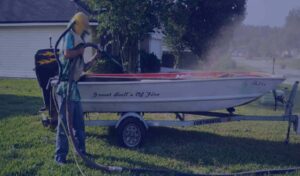
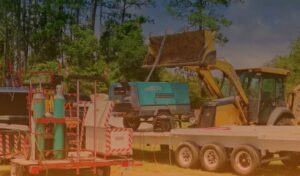
Can SP-10 be achieved outside a shop? Yes — mobile equipment reaches any standard. What changes in the field is protecting the surface afterward, which is a scheduling problem, not an equipment one.
What does blasting to a standard cost? Higher standards take more passes and finer control, so cost rises with the spec — typical local ranges are in our cost guide, and exact numbers come from a free on-site estimate.
A Florida Reality Check on Standards
Published standards assume a generic atmosphere. North Central Florida is not generic. Humidity sits high most of the year, summer brings daily rain, and unprotected steel flash-rusts in hours rather than days. In practice that shifts two things. First, service environments here are harsher than the same structure would face in a dry state, so when a spec offers a range — SP-6 or SP-10 — the humid-climate answer leans toward the stricter level for anything that lives outdoors. Second, the window between blasting and priming shrinks: a surface verified to standard at four in the afternoon must be primed that evening, not Monday. Crews that work here plan blasting around the weather and stage primer on site before the first pass of abrasive. Crews that do not learn this lesson at the expense of the customer.
Where Standards Meet Budgets
Each step up the cleanliness scale costs real money — more passes, more media, more time, more verification. That is exactly why the standards exist: they let an owner buy precisely the preparation a coating requires, no more and no less. The expensive mistakes live at the extremes. Under-specifying — a commercial blast under a primer that demands near-white — voids the coating warranty and fails early, repaying the savings several times over in rework. Over-specifying — white metal on a shed frame — burns budget on cleanliness nothing in the service environment will ever test. The data sheet, the environment, and an honest contractor triangulate the right level. When we quote spec work anywhere in Gainesville and Alachua County, the SSPC level, the media, the profile, and the priming window are all written into the quote — so what you approved is what gets verified on your steel.
Need sandblasting in Gainesville or nearby? Call 352-663-1129 for a free on-site estimate.