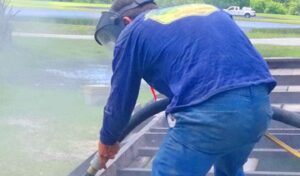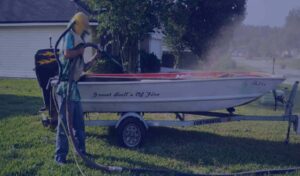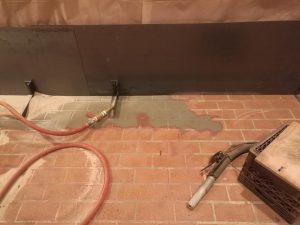
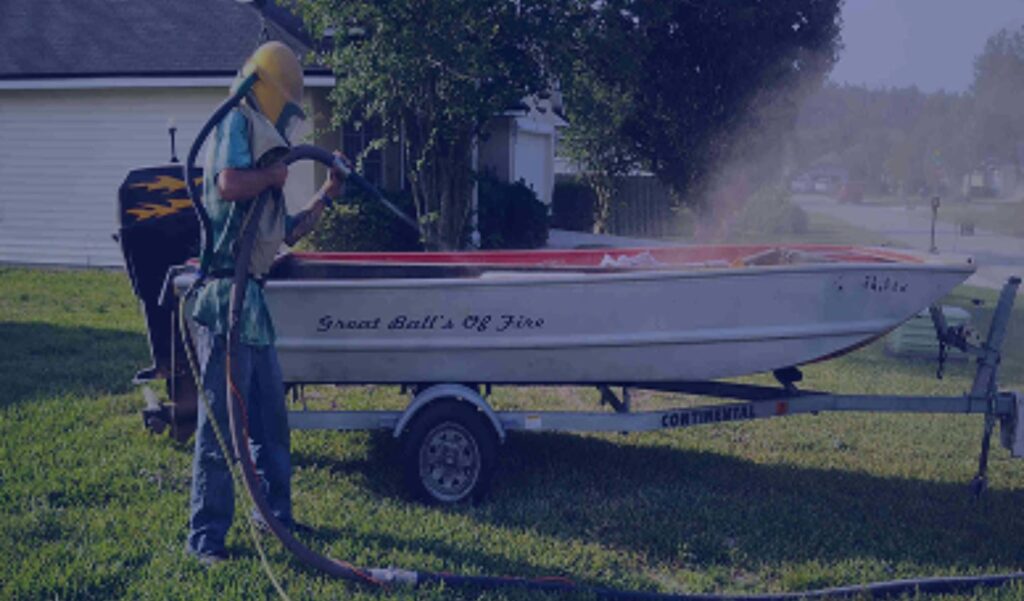
If you have a delicate surface to strip — an aluminum boat, a fiberglass panel, an engine block, an antique piece of woodwork — you have probably run into the question of soda blasting vs. sandblasting. They sound similar, but they do very different jobs. The short version: soda blasting is the gentle option that cleans and strips without cutting into the surface, while sandblasting is the aggressive option that removes rust and heavy coatings and leaves a profile for new paint. Choosing the wrong one either leaves the job half-done or damages something you cannot easily replace. Here is how to tell them apart and pick the right one.
What soda blasting is
Soda blasting uses sodium bicarbonate — essentially a specialized baking soda — as the blasting media. The crystals are friable, meaning they shatter on impact and release their energy as they break apart. That makes soda blasting non-aggressive: it lifts paint, grease, soot, and light corrosion off a surface without etching the material underneath. It does not leave a surface profile, it is water-soluble for easier cleanup, and it will not warp thin metal. Those traits make it a favorite for surfaces you cannot afford to gouge.
What sandblasting is
Sandblasting — more accurately, abrasive blasting — propels hard media like crushed glass, garnet, slag, or aluminum oxide at the surface to mechanically cut away whatever is bonded to it. It powers through rust, mill scale, and thick layered coatings that soda would never touch, and it leaves the textured anchor profile that paint and powder coat need to bond. That cutting action is exactly why it is the right tool for steel and the wrong tool for a thin aluminum hull. If you want the deeper detail on abrasives, our explainer on media blasting and abrasive types covers how each one behaves.
Soda blasting vs. sandblasting, side by side
| Factor | Soda blasting | Sandblasting |
|---|---|---|
| Aggressiveness | Gentle — strips without cutting | Aggressive — cuts rust and coatings |
| Leaves a surface profile? | No | Yes |
| Warping risk on thin metal | Very low | Higher if not controlled |
| Best surfaces | Aluminum, fiberglass, wood, engines, chrome | Steel, concrete, heavy coatings |
| Removes heavy rust? | No | Yes |
| Prepares for paint/powder coat? | Only where no profile is needed | Yes — creates the anchor profile |
When to choose soda blasting
Reach for soda when preserving the substrate matters more than creating a profile. It shines on aluminum boat hulls and fiberglass, where an aggressive abrasive would pit or warp the material; on engine blocks and chrome, where you want to remove grease and paint without changing the dimensions; and on wood, where it can lift old finish without tearing up the grain. It is also used for soot and mold remediation because the residue rinses away. The trade-off: because soda leaves no profile, it is not the right prep when the surface has to be repainted with a coating that needs tooth to grip.
When to choose sandblasting
Choose abrasive blasting whenever you are dealing with rust, heavy or layered coatings, or any surface that has to be primed and painted afterward. Structural steel, trailers, railings, gates, and machinery all fall here — the work we handle as metal sandblasting in Gainesville. It is also the only realistic option for concrete and masonry coating removal. And if the part is headed for powder coat, the profile is non-negotiable; our guide on sandblasting before powder coating explains why skipping it causes the finish to fail.
What about dustless blasting?
There is a third option worth knowing. Dustless blasting mixes water with abrasive media, which keeps the cutting power of sandblasting but knocks down the dust and reduces heat — a middle ground that is gentler than dry abrasive blasting and more capable than soda on rust. For many Florida jobs it is the practical choice, and you can read how we use it on our dustless blasting page. The right method always comes down to the surface and the goal, which is why we look at the actual part before recommending one. Whichever method a job calls for, a professional crew follows OSHA’s abrasive blasting safety requirements for dust and media control.
How soda blasting actually works
The reason soda is so gentle comes down to physics. Sodium bicarbonate crystals are relatively soft and friable, so when they hit a surface they fracture and release their energy by shattering rather than by gouging. That micro-explosion is enough to break the bond holding paint, grease, or soot to the surface, but not enough to cut into metal, fiberglass, or wood the way an angular abrasive does. It is the same idea as using baking soda for gentle cleaning around the house, scaled up with compressed air. Because the media dissolves in water, residue can be rinsed away, which is part of why soda is favored for engines, food-contact equipment, and enclosed spaces where leftover grit would be a problem.
Cost, cleanup, and speed differences
Soda and abrasive media are not interchangeable on price or pace. Soda media is generally consumed quickly — it shatters on contact and is not reused — which can make material costs higher on a big job. It also strips more slowly than aggressive abrasive on heavy coatings, so it is not the economical choice for cutting thick rust off a steel trailer. Where soda wins is cleanup and risk: the residue rinses, and the low chance of warping or etching means less expensive rework on delicate parts. For a small, delicate piece, the slightly higher media cost of soda is easily offset by avoiding a warped part you cannot replace. Abrasive blasting, by contrast, moves fast on tough material and often uses recyclable media, but generates more dust and grit to contain. The right call depends on which cost you care about most — media and time, or rework and risk.
Environmental and safety notes
Soda is non-toxic and water-soluble, which is part of its appeal, but it is not zero-impact — a flood of sodium bicarbonate can raise soil pH and harm plants, so runoff still needs to be managed near landscaping or waterways. Abrasive blasting raises fine dust, and on older coatings either method can release lead or other hazards from the paint being removed; old marine and industrial coatings deserve extra care for this reason. Whichever media is used, containment and respiratory protection matter, which is the same careful approach we bring to wood and other delicate surfaces.
Which should you choose? A simple rule of thumb
If the surface is delicate and you are mainly removing paint, grease, or light corrosion — aluminum, fiberglass, wood, chrome, engines — lean toward soda or a gentle method. If you are fighting real rust or heavy coatings, or the part has to be repainted with a coating that needs tooth to grip, you need abrasive blasting and the profile it leaves. And if you want most of the cutting power of sandblasting with less dust and heat, dustless blasting splits the difference and handles a large share of Florida jobs well. Most real projects are not purely one or the other, either — a restoration might call for abrasive blasting on a rusted steel frame and a gentler method on the aluminum panels bolted to it. Part of doing the job well is knowing where to switch. Tell us what the surface is and what is on it, and the recommendation usually becomes obvious.
Real-world examples of each method
A few common jobs make the choice concrete. Stripping decades of paint off a cast-iron radiator or an antique gate while keeping the fine detail crisp is soda or fine-media territory — an aggressive abrasive would round over the edges. Taking heavy rust and old coating off a steel trailer frame so it can be primed and painted is squarely a sandblasting job, because you need both the cutting power and the profile. Cleaning grease and baked-on grime off an engine block without changing tolerances leans toward soda. Prepping a concrete floor for an epoxy coating needs the tooth that only abrasive blasting leaves. And paint removal on an aluminum boat hull is best handled gently, often with soda or a controlled dustless pass, to avoid pitting the soft metal.
The pattern across all of them is simple: match the method to the surface and the end goal, not the other way around. When a single project mixes materials, it is normal to use more than one method on the same job.
Soda blasting vs. sandblasting: FAQs
Is soda blasting completely non-damaging? It is very gentle and will not etch most surfaces, but pressure and technique still matter. On soft or thin materials it is far safer than abrasive blasting, but a test patch is always wise.
Can I paint right after soda blasting? You can paint a soda-blasted surface, but because it leaves no profile and can leave an alkaline residue, the surface often needs a rinse and, for demanding coatings, a light abrasive pass to create tooth.
Which is better for an aluminum boat? Soda blasting or a gentle dustless approach is usually safer for aluminum, because aggressive abrasive can pit or warp the thin metal.
Which removes rust? Sandblasting. Soda lifts light surface corrosion but will not cut through real rust or mill scale — that needs abrasive media.
Need sandblasting in Gainesville or nearby? Call 352-663-1129 for a free on-site estimate.