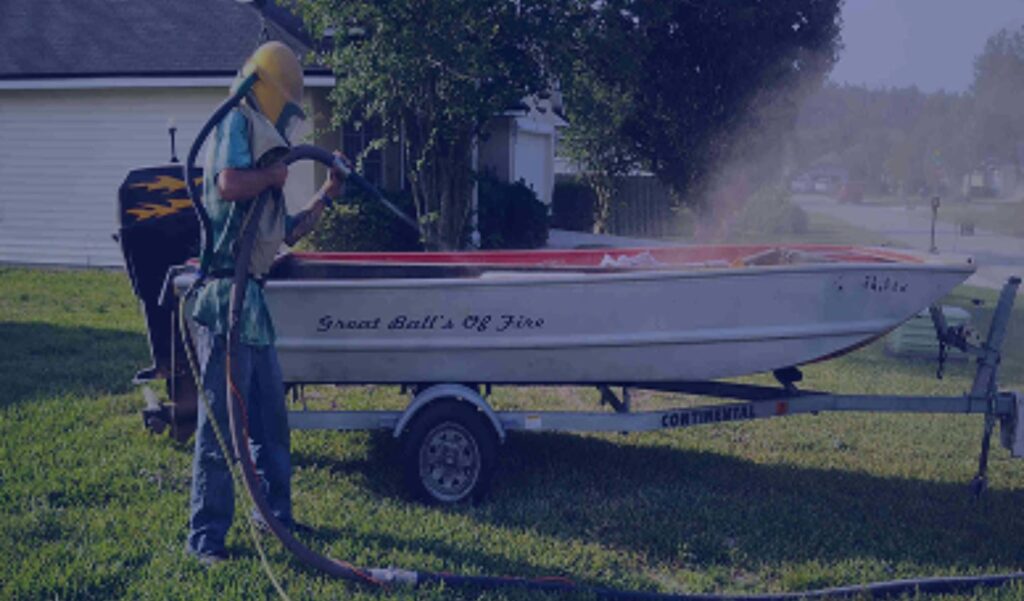
Every spring we get the same phone call from somebody on Newnans Lake or out past Melrose: the boat lift is streaking rust down the pilings, the dock frame has scale flaking into the water, and the paint they rolled on two years ago is peeling in sheets. Good marine surface preparation is the difference between a lift that lasts fifteen years and one you fight every other summer. Here is the honest part most people skip — around water, the prep matters more than the paint. You can buy the most expensive marine coating on the shelf, and if the steel underneath is dirty, it will fail anyway.
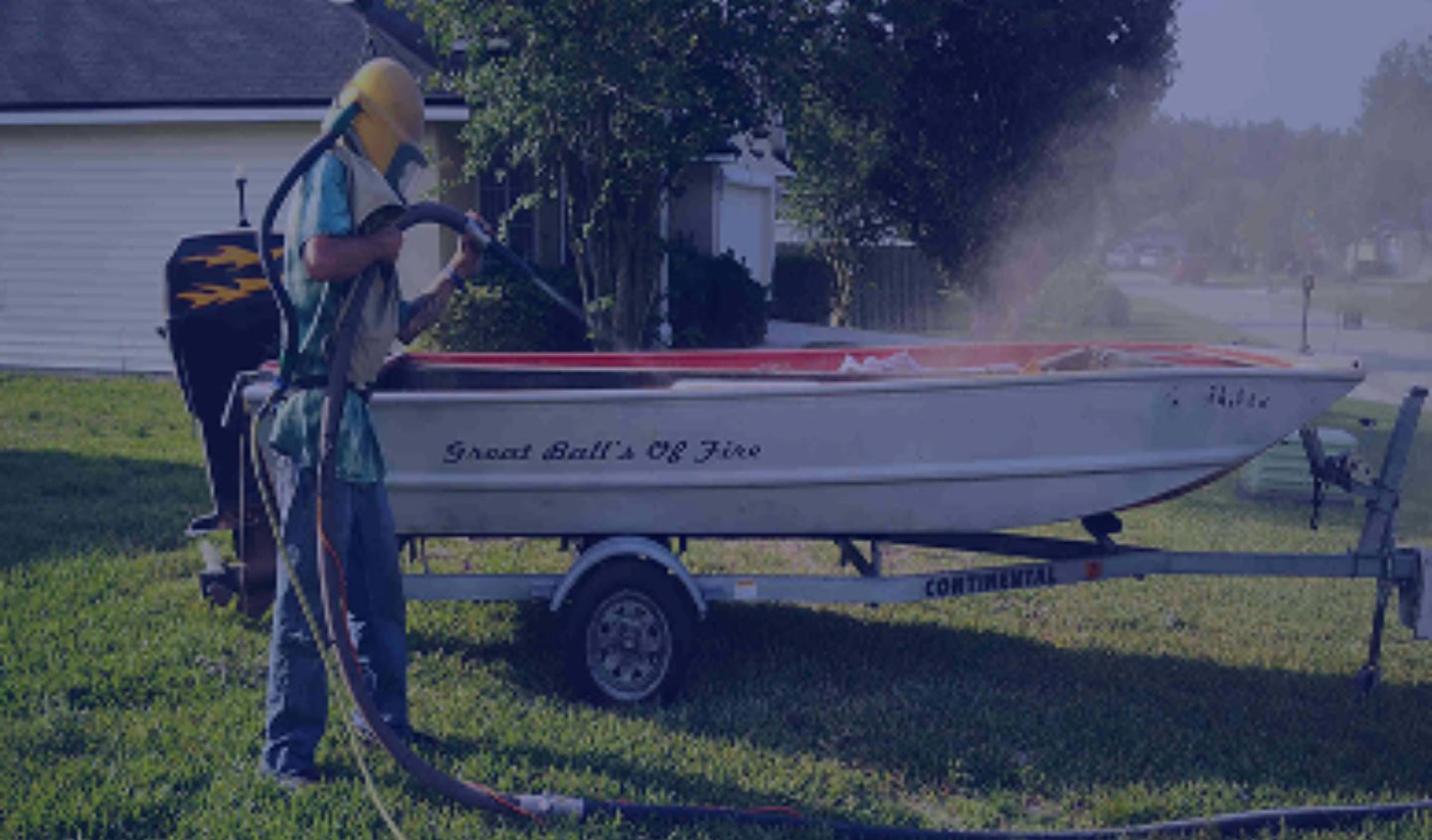
We are inland here in Alachua County, so people assume marine work does not apply to them. It absolutely does. Newnans, Orange Lake, Lochloosa, the Santa Fe River, the little private ponds out toward Hawthorne and Micanopy — all of that is dock frames, boat lifts, gangways, davits, trailer axles and pontoon rails. And half of Gainesville keeps a boat that runs to Cedar Key or the Suwannee on weekends, which means salt exposure on a rig that lives in a driveway off Tower Road the rest of the week. That combination is harder on metal than either one alone.
What marine surface preparation actually means
Strip it down and marine surface preparation is three jobs stacked on top of each other. First, get the contamination off — salt, algae, bird mess, old grease. Second, get the failed coating and corrosion off down to sound metal. Third, leave a surface profile the new coating can grip, and get primer on it before the humidity ruins your work.
Skip any one of those and you have wasted the day. Most failures we get called out to fix are not bad paint. They are good paint over bad prep.
Rule 1: Salt is the enemy you cannot see
Soluble salts are the whole ballgame in marine work, and they are invisible. You can blast a dock bracket to bright, shiny metal, look at it, and swear it is clean — and there is still chloride sitting in the pits. Coat over that and the salt pulls moisture straight through the film. Six months later you get blisters and rust bleeding out from underneath, and everybody blames the paint.
That is why anything that has been near brackish or salt water gets a fresh-water wash before we ever touch it with abrasive. Blasting salt-contaminated steel without washing it first just drives the chloride deeper and spreads it around. On a Suwannee or Cedar Key rig, we wash, then blast, and on the bad ones we wash again between passes. It adds time. It is not optional.
Rule 2: Match the media to the metal, not to the invoice
There is no single abrasive that is right for a whole dock. A steel I-beam under a boathouse and an aluminum gangway ten feet away want completely different treatment. We carry different media and we pick by the job site, never by the invoice — same price either way.
Heavy structural steel with mill scale and thick coatings wants an angular abrasive that cuts. Painted aluminum wants something softer and a lower pressure. Stainless hardware usually wants glass bead so you do not embed iron in it and start galvanic problems. If somebody quotes you a whole dock with one media and one pressure setting, they are blasting for their own convenience.
Rule 3: Galvanized is not steel, and it does not want to be blasted bare
This one costs people money every year. Most dock hardware, lift cables, brackets and piling caps around here are hot-dip galvanized. That zinc coating is doing real work. If you take an aggressive abrasive to it at 100 psi, you blow the zinc off and turn a piece of protected hardware into bare steel sitting over water. You just shortened its life by a decade to make it look nicer.
When galvanized needs recoating, it wants a light sweep blast — low pressure, fine media, just enough to knock off the white zinc oxide bloom and give a tooth for the primer. That is a completely different setup than the one we use on a rusted lift frame. We will tell you straight which one your piece wants when we look at it.
Rule 4: Aluminum lifts want a gentler hand
Aluminum boat lifts and pontoon rails are everywhere on the Alachua County lakes because they do not rust. They do oxidize, they do get chalky, and people do want them recoated. But aluminum is soft, thin-walled, and it will warp or dish if you hit it with steel-cutting pressure. We have been called in to fix aluminum somebody else blasted, and once a panel is oil-canned there is no un-doing it.
Low pressure, fine media, keep the nozzle moving, keep it at an angle. That is the whole trick. And never, ever use a steel-bearing abrasive on aluminum — the embedded iron particles will start corroding on their own and you will get rust streaks on a metal that cannot rust.
Rule 5: Prime the same day, or do not bother
Bare steel in Gainesville starts flash rusting before supper. Near water it is worse, because you have got humidity plus whatever is coming off the surface of the lake at dusk. We have watched clean steel go tan in under two hours on a July afternoon out by Orange Lake.
So we do not blast on Tuesday and come back Thursday to coat. We blast and prime the same day, same crew — that is the single biggest reason our painting and coating work in Gainesville holds up. One crew doing both means nobody is pointing fingers at the other guy when a coating fails, and nobody is standing around waiting on a subcontractor while your steel oxidizes.
Rule 6: Contain what you blast near water
Blasting over open water is not a free-for-all. Spent abrasive, old paint chips and whatever was in that coating should not end up in the lake, and if the structure was painted before the late 1970s you may be dealing with lead. That changes the job — containment, collection, proper disposal, and different protection for the crew. The OSHA guidance on abrasive blasting spells out what is required for respiratory protection and containment, and it is worth a read even if you are only hiring the work out, so you know what a serious outfit should be doing.
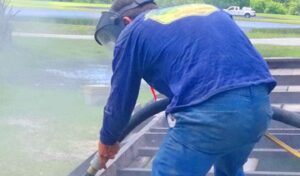
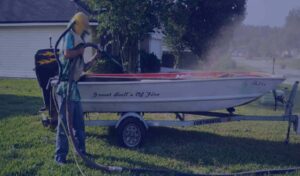
For dock and shoreline work where containment matters, wet or dustless blasting in Gainesville is often the better call. It knocks the dust down and keeps debris close. It also makes a wet muddy mess and leaves a film you have to rinse before you can coat, so it trades one problem for another. We will tell you which trade is worth making on your job.
Rule 7: Sometimes you should not hire us
If you have got three rusty bolts and a bracket on a small dock, a wire brush, a can of cold galvanizing spray and a Saturday morning will do the job fine. We are not going to pretend otherwise to sell you a mobilization.
Where it makes sense to bring a rig out is when the scale is real — a whole lift frame, a boathouse structure, a set of davits, a trailer that has been dunked in salt for ten years, or anything where you have already repainted once and watched it fail. That second failure is usually the tell that the prep was never right to begin with. Our metal sandblasting in Gainesville page covers what that process looks like on structural steel.
How a dock or lift job actually runs
We come look at it first, free, and we look at the whole structure — not just the part you are unhappy about. Half the time the ugly bracket is fine and the piece quietly failing is the one under the decking nobody can see.
Then it is wash, mask and protect what stays, blast to the standard the coating system needs, blow down, and prime. The industry writes those cleanliness standards down so there is no arguing about what “clean” means — the SSPC surface preparation standards define everything from a light brush-off to a full white metal blast, and the coating manufacturer tells you which one their product requires. We prep to that standard, not to whatever looks good enough at four in the afternoon.
On a lakefront job we work off the bank or off a barge depending on access, and on trailers, davits and removable hardware it is often faster and cleaner to haul the parts to the shop out toward the Newberry–Alachua corridor and bring them back coated. Either way, one crew, one number, and the number you approve is the number on the invoice.
Marine surface preparation is unglamorous work. Nobody photographs the wash step. But it is the reason some lifts on these lakes still look right after twelve years and others are streaking rust before the second season.
Need sandblasting in Gainesville or nearby? Call (352) 663-1129 for a free on-site estimate. You will reach someone who actually does the work.