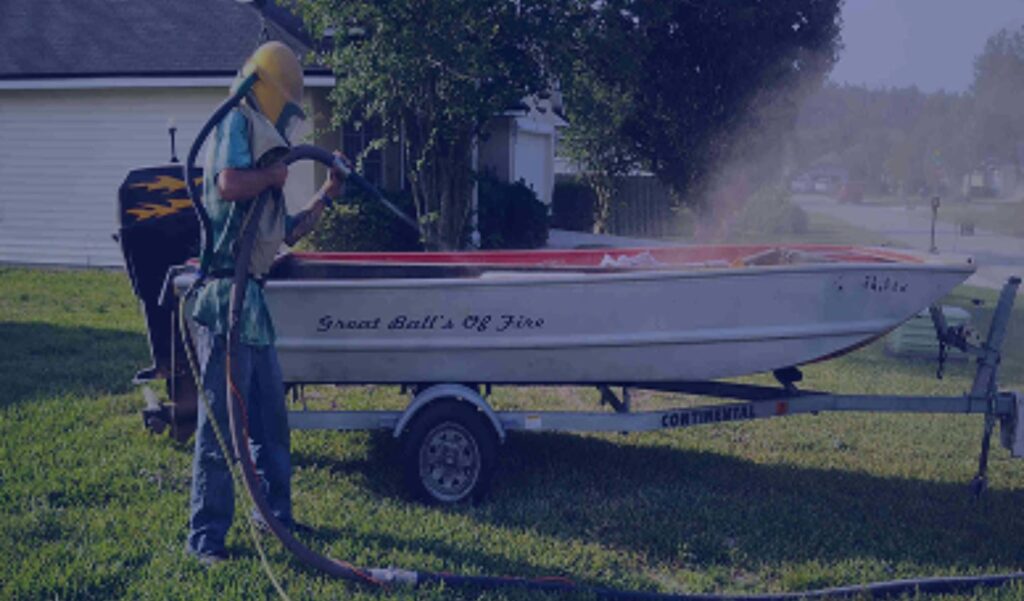
Sandblasting vs chemical stripping comes up on almost every estimate we run in Gainesville, and most people already have a guess before we pull into the driveway. Usually the guess is wrong. Not because folks are careless, but because these two methods fail in ways nobody warns you about. Blasting can chew through a soft substrate in four seconds flat. Chemical stripper can sit on an iron rail all afternoon and hand you gummy residue plus a disposal headache. Neither one is the hero. The job decides, every single time.
Here is the honest part most people skip: we do not have a favorite. Same crew, same rig, same way of pricing it. We pick by the surface, the coating, the level of detail, and what happens to the mess afterward. What follows is exactly how we sort it out on an Alachua County job site.
Sandblasting vs Chemical Stripping: The Short Answer
Abrasive blasting throws media at a surface under pressure and knocks the coating off mechanically. Chemical stripping softens the coating with a solvent or caustic so you can scrape or rinse it away. Blasting removes coating and gives you a surface profile — the microscopic tooth that new primer grabs onto. Stripping removes coating and leaves the substrate more or less the way it was underneath, smooth and often slightly contaminated with whatever the stripper left behind.
That single difference drives most of the decision. If the next step is paint or an industrial coating on steel, blasting is usually the shorter road, because you have to create a profile anyway. If the next step is stain on old heart pine, or you are trying to save carved detail, the chemical route deserves a real look.
Rule 1: The Substrate Picks the Method, Not Your Preference
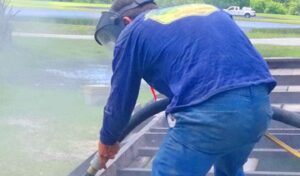
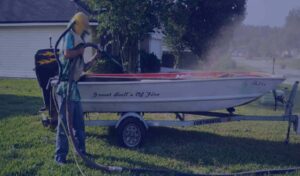
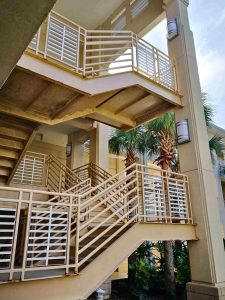
Structural steel, trailer frames, farm implements, gates, tanks, railings — that is blasting country. Steel is hard, it wants a profile, and mill scale and old rust come off fastest with abrasive. See our metal sandblasting work in Gainesville for what that looks like in practice.
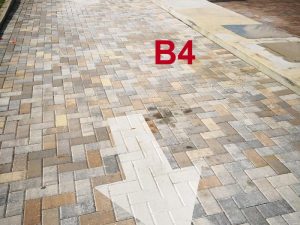
Soft or thin substrates are where people get in trouble. Thin sheet metal warps from heat and impact. Old cypress and heart pine are soft in the summerwood and hard in the growth rings, so aggressive blasting carves a corduroy texture into the board. Soft brick and lime mortar — common in older Gainesville buildings — can lose the fired face and start drinking water. We still blast plenty of wood and masonry, but with different media at much lower pressure. That is a different service and a different conversation: wood sandblasting and brick and masonry blasting are not the same animal as knocking scale off a trailer frame.
If the substrate is fragile, ornate, and small enough for one person to work by hand, chemical stripping is often gentler. If the substrate is steel, or big, or both, blasting wins on almost every axis.
Rule 2: Chemical Stripping Wins on Detail and Silence
There are jobs where stripper is simply the better tool and we will say so. A carved interior mantel. Cabinet doors with fine bead detail. A cast iron piece where the pattern is the value. Chemicals do not care about line-of-sight — they creep into undercuts and crevices that a nozzle can never reach square-on, and they do not round over a crisp edge.
Stripper is also quiet and contained. Inside an occupied building, in a tight courtyard off a downtown street, in a rental unit near campus with tenants upstairs — you cannot always run a blast pot and a compressor. Nobody is thrilled about a diesel compressor at seven in the morning behind a duplex.
The trade-off is time and labor. Stripping is a dwell-and-scrape cycle, often two or three passes, then a neutralizing rinse, then drying time. In Gainesville humidity that drying step is not a formality — it is the whole ballgame, and we will come back to that.
Rule 3: Blasting Wins on Speed, Scale, and What Comes Next
On anything sizable, blasting is not a little faster — it is a different order of magnitude. A gate a crew would spend a day and a half stripping, neutralizing, and rinsing can be blasted in a fraction of that, and it comes out with a profile that primer bites into immediately.
That last part matters more than most people realize. A chemically stripped steel surface is clean but slick, and it may still carry solvent residue or caustic salts. Coating manufacturers write their datasheets around a blast-cleaned surface with a stated profile, referencing SSPC standards for a reason. If you strip chemically and then paint, you often have to abrade the surface anyway to get adhesion — so you did the work twice.
There is also the humidity problem. Bare steel in North Central Florida starts flash rusting within hours, sometimes before you have finished walking the job. That is why we blast and coat with the same crew on the same day whenever the job allows. Handing a customer bare steel and telling them to find a painter next week is how a good blast job turns into an orange one. Our painting and coating services exist for exactly that reason.
Rule 4: Somebody Has to Deal With the Waste
This is the part that never makes it into the sales pitch, so here it is straight. Both methods make waste, and the waste is different.
Blasting produces spent media mixed with old coating chips. It is dry, it is sweepable, and on a contained job it goes into drums. Dry blasting also produces dust, which is why containment, tarps, and respiratory protection are not optional — OSHA’s abrasive blasting guidance spells out the exposure controls, and we work to them.
Chemical stripping produces a sludge of solvent, softened paint, and rinse water. That slurry is frequently a regulated waste, and you cannot rinse it into a storm drain or let it soak into the ground next to a well. Alachua County sits on karst limestone with springs and sinkholes feeding the aquifer, and around here that is not an abstract concern. The EPA’s RRP program and state waste rules govern how that material has to be handled. Homeowners doing a small piece in a garage often do not think about it at all, and that is where the trouble starts.
If low water and low mess are the priority, dry blasting under containment usually beats a stripper slurry. If dust is the enemy, our dustless and green blasting option knocks the airborne dust down hard — but it introduces water, which means mud, and mud that dries on the surface has to be washed off before you can coat. It trades one problem for another. We will tell you straight which one your job wants.
Rule 5: Lead Paint Changes the Whole Conversation
Anything painted before 1978 gets treated as lead until a test says otherwise. That covers a lot of Gainesville — older neighborhoods around the historic core, farmhouses out toward Newberry and Alachua, barns and equipment that have been repainted six times since the Carter administration.
Lead does not automatically rule out either method, but it changes both. Blasting lead paint requires full containment and disciplined waste capture. Chemical stripping keeps the lead in a wet sludge instead of the air, which sounds better and sometimes is — but that sludge is now hazardous waste that has to be manifested and hauled, not bagged with the yard debris.
The wrong answer is scraping or sanding it dry in the open air on a windy afternoon. If your project involves pre-1978 coating, test first. Do not guess, and do not let anyone talk you into starting before the test comes back.
Rule 6: Sometimes the Honest Answer Is Neither
We would rather lose the job than take money for work you do not need. A single porch railing with surface rust and one coat of enamel? A wire brush, a can of rust converter, and a Saturday will get you there. One small cast piece? A quart of stripper and patience beats hiring a rig with a minimum charge.
Blasting starts making sense when there is real square footage, when the coating is layered or stubborn, when the substrate is steel headed for a real coating system, or when you need it done in one visit instead of three weekends. Below that line, we will tell you to save your money. That honest no is why the phone rings again later.
How We Decide on a Gainesville Job Site
Walking a job, we run the same five questions in order. What is the substrate, and how soft is it? How many coats are on it, and what are they? How much detail has to survive? What coating goes on afterward, and does it need a profile? And where does the waste go — is this a site we can contain and sweep, or a site where a wet slurry is going to end up somewhere it should not?
Answer those five and the sandblasting vs chemical stripping question usually answers itself. Steel headed for paint, out in the open, at any real scale: blast it, prime it before the humidity gets a vote. Fine detail, occupied space, small piece, delicate substrate: chemical, or hand work, or a much softer media at low pressure. Mixed job — say a farm gate with cast ornament — sometimes gets both, blast the flat stock and hand-strip the detail.
We match media to surface and method to job, and we tell you which one before we start, not after. If the honest recommendation is the cheaper one, that is the one you will hear.
Need sandblasting in Gainesville or nearby? Call (352) 663-1129 for a free on-site estimate. You will reach someone who actually does the work.