
A rusted metal roof is one of those problems that looks worse than it usually is — and gets fixed wrong more often than almost anything else we see. Homeowners either pressure wash it, paint over the rust, and watch the same streaks bleed through within a year, or they assume the whole roof needs replacing when the panels underneath are actually still sound. Metal roof sandblasting sits in the middle: it’s often the fastest way to get a standing-seam or corrugated roof back to bare, paintable metal without the cost of tear-off and replacement — but only when it’s handled with the right pressure, media, and sequencing. Here’s what we’ve learned doing this work across Gainesville and Alachua County’s humid, storm-heavy climate.
1. Surface Rust Doesn’t Always Mean Structural Failure
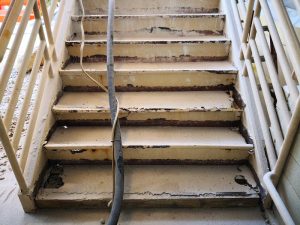
Florida humidity, afternoon storms, and years of standing water at seams and fastener heads will chalk and rust a metal roof’s finish long before the panels themselves are actually compromised. A rusted appearance is often just a failed factory coating, not a roof that needs replacing. Before assuming the worst, it’s worth having someone assess whether the metal underneath is still solid — because if it is, metal roof sandblasting followed by a proper coating system can add many more years of service life for a fraction of a full re-roof.
2. Pressure Washing Alone Won’t Get You There
A pressure washer removes loose dirt, mildew, and flaking paint, but it can’t touch rust that’s bonded to the metal, and it can drive water under overlapping panels and fasteners if it’s aimed the wrong way. Sandblasting removes rust down to a clean, mechanically profiled surface that primer and topcoat can actually grip — which is the entire point of surface prep. If a roof only gets power-washed before repainting, the new paint job is usually just buying a year or two before the same rust bleeds back through.
3. Pressure and Media Have to Match the Panel Gauge
Metal roofing panels are thin — usually 24- to 29-gauge steel or aluminum — and blasting them like structural steel will warp, dish, or blow straight through them. Effective metal roof sandblasting uses lighter media at lower pressure, worked in controlled passes, the same discipline we apply when we do metal sandblasting on any thin-gauge material — trailers, gutters, flashing. A contractor who runs the same aggressive settings on a roof panel that they’d use on a piece of angle iron is going to leave you with more problems than they solved.
4. Dust Control Isn’t Optional on an Occupied Property
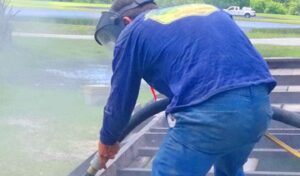
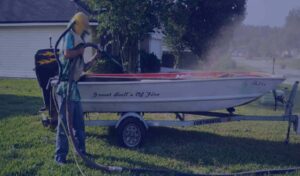
A roof sits above landscaping, vehicles, HVAC equipment, pools, and often a neighbor’s property line — all things you don’t want covered in spent abrasive and paint chips. This is exactly the kind of project where dustless / green blasting earns its keep: mixing water into the media stream suppresses airborne dust at the point of impact by up to 92% compared to dry blasting, which matters a lot when you’re working over an occupied home rather than an open field. It also cuts down dramatically on cleanup time afterward.
5. Bare Metal Won’t Stay Bare Long in Florida
Once rust and old coating are stripped away, the clock starts immediately — we’ve covered why bare steel flash rusts within hours in Florida’s climate, and a roof deck exposed to full sun and humidity is no exception. The blasting and priming need to happen as close together as possible, ideally the same day, section by section if the roof is large. A shop that blasts the whole roof and comes back “next week” for primer is setting you up for a fresh layer of rust before the first coat ever goes on. Our painting and coating services exist specifically to close that gap.
6. Not Every Rusted Roof Needs Full Removal to Bare Metal
Depending on the coating system going back on, some manufacturers only require the surface to be free of loose material and properly profiled — not stripped to shining bare steel everywhere. This is a spec question, and it’s worth asking whoever’s supplying your topcoat what surface condition they actually require before paying for more blasting than the project needs. An honest contractor will tell you when a lighter pass gets the job done just as well as a full strip, instead of upselling you on more work than the coating spec calls for.
What Metal Roof Sandblasting Costs in Gainesville
Cost depends on roof pitch, accessibility, panel condition, and square footage — a steep standing-seam roof with limited access costs more to blast safely than a low-slope pole barn roof at ground level. We provide free on-site estimates so you know the real number before committing, the same approach we take on every job listed in our sandblasting cost guide. There’s no reason to guess when a quote takes one visit to nail down accurately.
Rust Removal Guidance Backs This Up
A metal roof that’s rusting but still structurally sound is one of the better problems a Gainesville property owner can have — it’s fixable, and often far cheaper than a full replacement, if it’s handled correctly and promptly. If you’re seeing rust bleeding through the paint on a metal roof anywhere in Gainesville, Alachua, Newberry, High Springs, or the surrounding area, we’ll come take a look, tell you honestly whether metal roof sandblasting and recoating makes sense for your roof, and give you a clear, written estimate before anything starts.
Call (352) 663-1129 for a free on-site assessment, or request a quote online and we’ll schedule a visit.