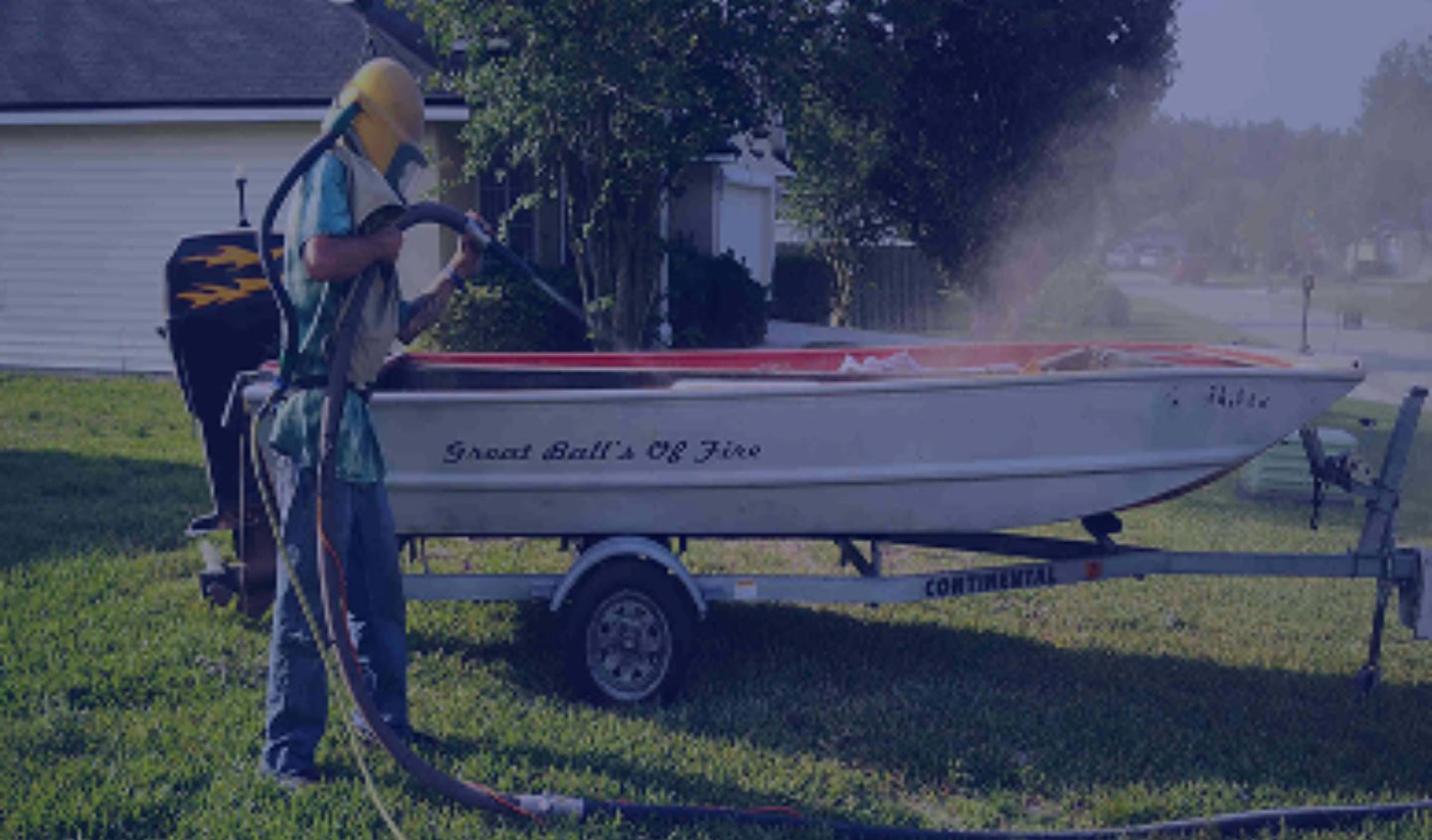
Flash rust is the orange film that creeps back over bare steel within hours of you cleaning it — and in Gainesville, FL, it shows up faster than almost anywhere. You strip a trailer frame down to clean gray metal in the morning, walk away to grab lunch, and by the time you’re back there’s a light brown haze sitting on the surface. That’s flash rust, and if you don’t understand it, it’ll quietly ruin a paint job before the first coat ever goes on. Here is the honest part most people skip: in our humidity, bare steel starts flash rusting before supper, and pretending otherwise is how coatings fail.
We blast and coat steel all over Alachua County — barns out toward Newberry, horse trailers in farm country, railings and equipment around UF and town. So this isn’t theory for us. It’s the thing we plan every single job around.
What Flash Rust Actually Is
When steel sits out in the world, it grows a layer of mill scale and old rust and grime. Blasting blows all of that off and leaves you with chemically clean, bare metal — what the trade calls a “white” or “near-white” surface. The problem is that clean steel is hungry. With nothing protecting it, the iron immediately wants to bond with oxygen and water vapor in the air. Flash rust is that reaction happening in fast-forward: a thin, even film of fresh oxidation that forms in minutes to hours, not days.
It’s different from the heavy, flaking rust you started with. Flash rust is usually light tan to orange, powdery, and tightly stuck. A lot of folks see it and panic, thinking the blasting “didn’t work.” It worked fine. The steel is just doing what bare steel does. The real question is whether you get a coating on before that film turns into a problem.
Why North Central Florida Is the Worst Place for It
Flash rust is driven by three things: moisture in the air, temperature, and soluble salts left on the surface. Central Florida hands you all three on a platter.
Our relative humidity sits high most of the year, and through the summer it’s brutal — afternoon storms, dew that hangs into mid-morning, and air that feels like a wet towel. Steel doesn’t even need rain to flash; it just needs the air to be damp enough that moisture condenses on a cool metal surface. Park a trailer in a shaded barn aisle where the metal stays cooler than the air, and you can watch condensation form on it. That’s flash rust fuel.
Then there’s salt. If a piece has been near the coast, hauled fish, or sat in fertilizer and animal waste out on a farm, it carries soluble salts down in the pits. Blasting alone doesn’t always pull those out, and salts pull moisture out of the air like a sponge. A surface that looks clean can still be loaded with invisible salt that makes flash rust come back almost the instant you finish. This is exactly why the pros measure it — the folks at SSPC (now part of AMPP) built whole standards around surface cleanliness and soluble salt limits because they learned the hard way that a “clean” surface isn’t always ready to paint.
The Real Damage: Why Flash Rust Ruins Coatings
Here’s why we make such a fuss about a film you can barely see. Paint, primer, and industrial coatings are designed to bond to clean, profiled steel — the tiny peaks and valleys blasting creates, what we call the surface profile or “anchor pattern.” When flash rust forms, you’re no longer painting steel. You’re painting over a loose, powdery layer of oxidation that’s only weakly attached to the metal underneath.
The coating grabs the rust film instead of the steel. For a while it looks fine. Then months later, in the heat-and-moisture cycle that is a Gainesville summer, that weak layer lets go. The paint blisters, peels, or lifts in sheets, and the rust underneath spreads. You paid for a finish that was doomed before the brush touched it. We’ve stripped plenty of jobs other people coated over flash rust, and the customer always says the same thing: “It looked great when they finished.” It always does.
How We Actually Beat Flash Rust on a Job
You don’t beat flash rust by wishing the humidity away. You beat it with timing and method. Here’s how we run it.
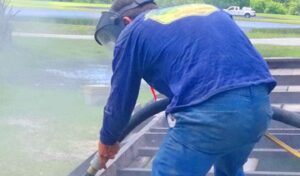
1. We blast and prime the same day — same crew. This is the biggest one. The shorter the window between bare metal and the first coat, the less flash rust you get. Because we do both the metal sandblasting in Gainesville and the coating, there’s no waiting on a second company to show up two days later. We blast a section, check it, and prime and coat it the same day before the steel has time to turn. One crew, no finger-pointing, no gap for rust to sneak into.
2. We watch the weather and the dew point. Coating standards say to keep steel at least 5°F above the dew point while you work, or condensation forms right under your coating. On a muggy Florida morning that rules out painting until things warm up and dry out. We’d rather hold a job a few hours than trap moisture under the primer. If a wire brush and a Saturday will do for your little project, we’ll tell you that too — but if it’s bare blasted steel, the dew point matters.
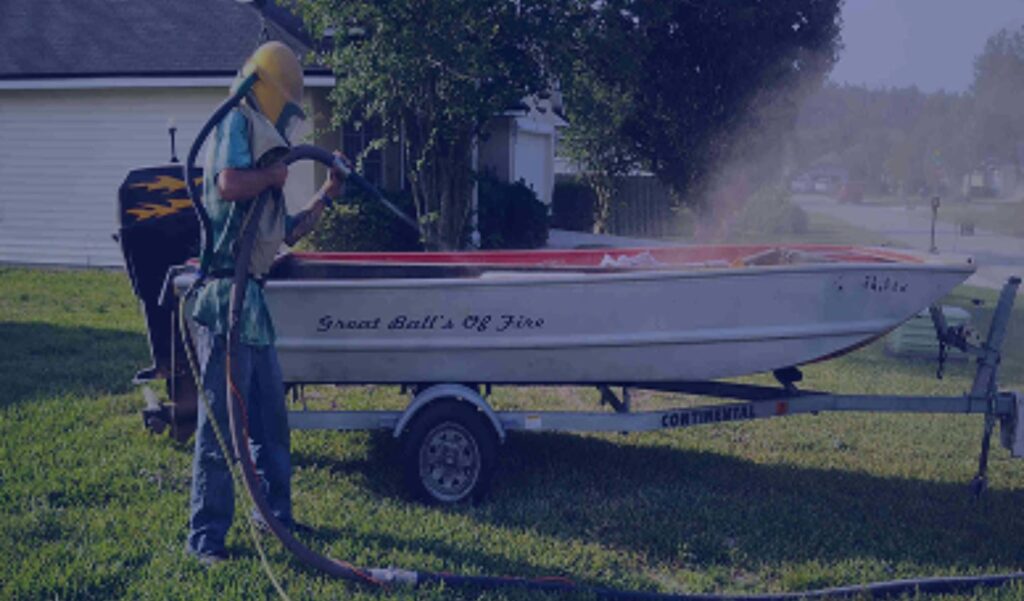
3. We match the method to the surface. Dry blasting leaves a bone-dry surface, which is an advantage in the flash-rust fight because there’s no added water sitting on the metal. Dustless blasting uses water in the mix, and that water — honestly — can kick off flash rust faster unless we use a rust inhibitor in the slurry and move quickly. Each method has a place. We pick by the job site, never the invoice, and we’ll tell you straight which one your job wants.
4. On salty or pitted steel, we test and rinse. If a piece has a salt history — coastal, farm, or marine — we may rinse and check soluble salt levels before coating, because no amount of fast priming fixes salt you sealed inside the pits. It trades one problem for another. Better to deal with it up front.
What You Can Do If You’re Blasting It Yourself
Plenty of folks around here do their own small jobs, and we respect that. If you’re blasting a gate or a trailer hitch in your own shop, the rules don’t change — they just land on you. Work in the driest part of the day, keep your compressed air clean and dry (a wet air line sprays moisture right onto your fresh metal), and have your primer mixed and ready before you make the first pass. Blast a manageable section, blow it down, and prime it before you move on. Don’t strip the whole frame and then go looking for the paint. For a refresher on keeping abrasive blasting safe while you’re at it, OSHA’s abrasive blasting guidance is worth a read, especially around silica and breathing protection.
When to Just Call Us
If the steel matters — a trailer you’ll haul for ten years, equipment that has to hold up, a railing you don’t want to redo in two summers — the flash-rust window is too tight to gamble on. The whole value of blasting is that clean, profiled surface, and that value evaporates if rust beats your primer to it. Doing the blast and the coat with one crew, in the same visit, reading the Florida weather as we go, is the difference between a finish that lasts and one that peels by next year.
We’ve been beating flash rust on Gainesville and Alachua County steel long enough to know it’s not about fancy gear — it’s about respecting how fast bare metal turns here and never leaving it naked longer than we have to.
Need sandblasting in Gainesville or nearby? Call (352) 663-1129 for a free on-site estimate. You will reach someone who actually does the work.