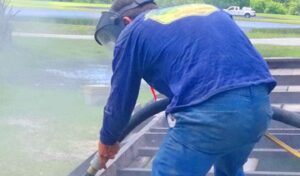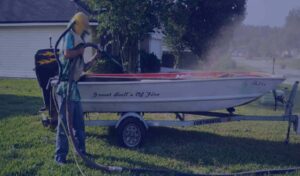
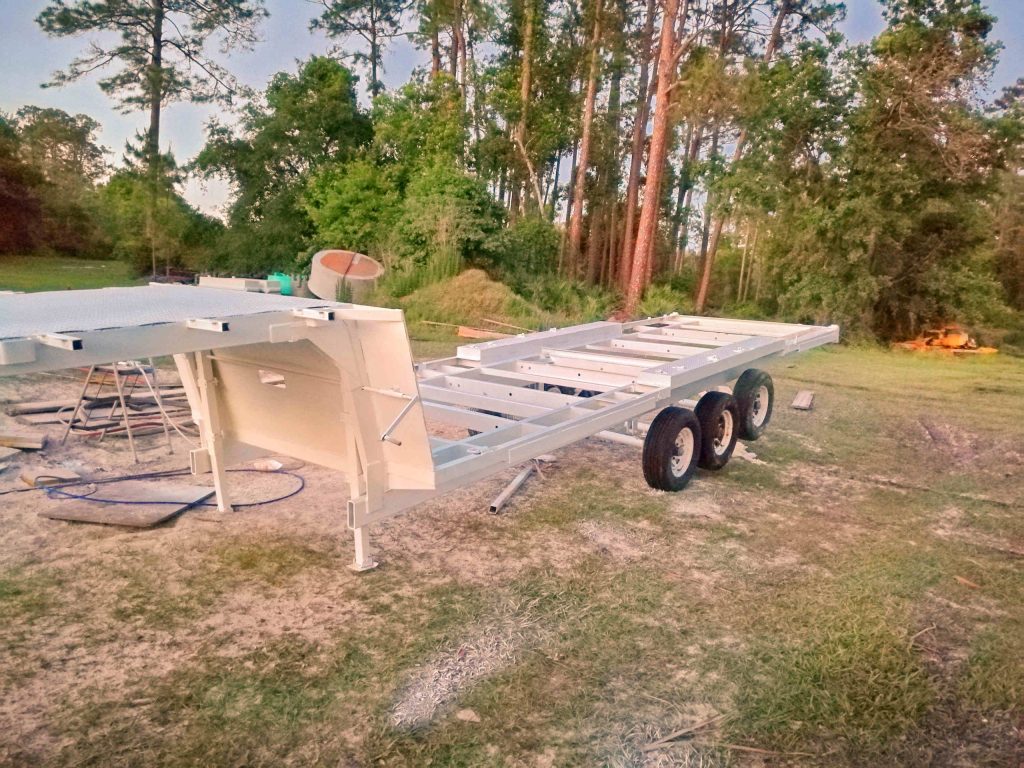
Florida is hard on anything made of metal that goes near the water. Salt, humidity, and brackish boat ramps work on a trailer frame and a hull around the clock, and rust usually shows up first at the welds, the contact points, and anywhere old paint has chipped. If you are looking into boat and trailer sandblasting in Florida, the goal is the same whether it is a utility trailer, a tandem-axle boat trailer, or an aluminum jon boat: strip off the rust, old marine coatings, and failing paint, and get back to sound metal so a fresh protective coating actually lasts. Here is what that involves and what to expect.
Why Florida is so hard on boats and trailers
Saltwater is corrosive on its own, but the bigger problem is repetition. Every launch dunks a trailer in water, and around the Gainesville area that water is often brackish or mineral-heavy. Add year-round humidity and relentless sun, and coatings break down faster than they do almost anywhere else. Galvanic corrosion — dissimilar metals reacting where they touch — speeds things up at bolts and fittings. Once rust gets a foothold under old paint, it spreads underneath the coating where you cannot see it, which is why surface patching rarely holds.
Boat trailer sandblasting
Trailer frames are usually steel, and steel in this climate rusts from the inside of the coating outward. Sandblasting strips the frame back to bare, clean metal — including the rust hiding in the channel, around the welds, and behind the fenders — so corrosion is not sealed in under the new finish. Once it is blasted to a clean profile, the frame is ready for primer and a durable topcoat, or for prep ahead of re-galvanizing. This is core metal sandblasting work, and it is the only way to be sure the rust is actually gone rather than painted over.
Boat hulls and aluminum jon boats
Hulls need a more careful hand than trailer frames. Aluminum is thin and soft compared to structural steel, so aggressive abrasive at full pressure can pit or even warp it. The fix is matching the media and pressure to the metal — a gentler approach that removes old bottom paint, oxidation, and failed coatings without chewing into the hull. The same care applies to removing antifouling paint, which is built to be stubborn. For especially delicate hulls, a softer or dustless method is often the better call; our dustless blasting page explains that gentler, lower-heat process.
Removing old bottom paint and marine coatings
Old antifouling and bottom paints are designed to resist weather and marine growth, so they do not come off easily — and they often contain copper compounds and biocides, which means the debris should be contained rather than scattered. A professional setup captures the spent media and old coating instead of letting it wash into the soil or a waterway. Because abrasive blasting also raises fine dust and old marine paint can contain hazardous compounds, the work follows OSHA’s abrasive blasting safety requirements for containment and protection.
What happens after blasting
Bare metal does not stay clean for long in Florida — flash rust can start within hours of blasting a steel frame. That is why the coating step has to follow quickly. A typical sequence is blast to clean metal, inspect, then prime and topcoat while the surface is still sound, often the same day. Trailers usually get a corrosion-resistant primer and a tough enamel or industrial coating; you can see how we pair blasting with finish work on our painting and coating services page. Getting the timing right is the difference between a frame that looks good for years and one that starts bleeding rust again in a season.
Mobile service across North Central Florida
Boats and trailers are awkward to move, so we bring the work to you. Our mobile unit sets up at your storage yard, your driveway, or the marina anywhere in Gainesville and the surrounding Alachua County area — no need to haul a rusty trailer across the county to a shop. If you are weighing blasting against just washing the frame down, our comparison of sandblasting vs. pressure washing explains why washing alone will not stop rust that has already set in.
Signs your trailer or boat needs blasting
It is easy to put off until the rust is obvious, but a few early signs mean it is time. Surface rust creeping out from welds, bolts, and the inside edges of channel is the classic first warning on a steel trailer. Paint that bubbles, flakes, or shows brown streaks below it means corrosion is already working underneath the coating. On aluminum boats, chalky white oxidation, pitting, or flaking bottom paint signals the surface needs to be stripped and recoated. Soft spots, scale you can pick at, or fasteners weeping rust are all telling you the same thing: patching over it will not last, and the metal needs to go back to a clean starting point. If you trailer a boat regularly, an annual look is worth it — catching rust early keeps a quick prep job from turning into major repair.
Galvanized vs. painted trailers
Not every trailer is treated the same. Painted steel trailers are the most common around here, and they are straightforward to blast and recoat. Galvanized trailers have a zinc layer that resists rust well — until it is damaged or worn through, after which they rust like any steel. Blasting a galvanized frame is done carefully, because the goal is usually to clean and prep without needlessly removing sound galvanizing; in many cases a damaged galvanized trailer is blasted back to bare metal and then given a zinc-rich primer and topcoat to rebuild the protection. Either way, the prep is what determines how long the new finish holds, and we talk through which path makes sense for your specific trailer when we look at it.
Keeping rust away after blasting
A blast-and-coat job buys you years, but Florida will test it. A few habits stretch the result: rinse the trailer with fresh water after saltwater or brackish launches, especially around the axle, springs, and contact points; touch up chips in the coating before they spread; and keep an eye on the spots that always go first — welds, fasteners, and the underside. A garden hose and ten minutes after a saltwater trip pays off for years. The same goes for a boat hull: a sound coating maintained early is far cheaper than another full strip-and-recoat, and getting a durable industrial coating on in the first place is what makes that maintenance easy rather than a losing battle.
Why mobile blasting makes sense for boats and trailers
Boats and trailers are the definition of awkward to transport, and a rusty trailer is exactly the thing you do not want to tow across the county. A mobile crew removes that problem: the equipment comes to wherever the boat or trailer sits — a storage lot, a marina, a barn, or your own driveway — and the work happens there. That also means the blasting and the protective coating can be staged in one place, so the bare metal is not exposed to humidity during a long haul between a blast shop and a paint shop. It is also easier to schedule around the weather, since we can pick a dry window and set up on short notice when conditions are right. For boat and trailer owners across Gainesville and the surrounding area, that is usually the difference between getting the job done and putting it off another season.
What about fiberglass hulls?
Steel and aluminum are not the only boats that come up. Fiberglass hulls can be stripped of old bottom paint and gelcoat oxidation, but they demand a gentle touch — the goal is to remove the coating without grinding into the gelcoat or exposing the fiberglass weave underneath. That usually means softer media and lower pressure, or a dustless approach, rather than aggressive dry abrasive. The same judgment that protects a thin aluminum hull protects fiberglass: enough energy to release the old coating, not enough to damage the surface you want to keep. If you are not sure what your hull is made of or how it should be handled, that is exactly the kind of thing we sort out during the free on-site look before any media flies.
Boat and trailer sandblasting: FAQs
Can you blast an aluminum boat without damaging it? Yes, by matching the media and pressure to the metal. Aluminum is handled with a gentler approach than a steel trailer frame to avoid pitting or warping.
Will sandblasting remove old bottom paint and antifouling? Yes. Abrasive blasting strips stubborn marine coatings back to sound material, and the debris is contained because those paints can contain copper and biocides.
Do you coat the trailer after blasting, or just strip it? We can do both. Blasting and coating work best as one process, since bare steel needs to be primed before flash rust sets in.
Do you come to the boat, or do I bring it to you? We come to you. Our mobile unit works at your yard, driveway, or marina across Gainesville and Alachua County.
Need sandblasting in Gainesville or nearby? Call 352-663-1129 for a free on-site estimate.