A fresh tag on a storefront, a dumpster enclosure, a block wall, or a warehouse roll-up door is more than an eyesore — left up, it invites more of the same. If you are searching for graffiti removal in Gainesville, FL, the most effective option for most surfaces is abrasive or dustless blasting, because it pulls paint out of the pores instead of just smearing it around on top. The catch is that the right method depends entirely on what was tagged. This guide covers why graffiti is so stubborn, the best removal approach for brick, concrete, and metal, and how to get a surface clean without trading paint for damage.
Why graffiti is so hard to remove
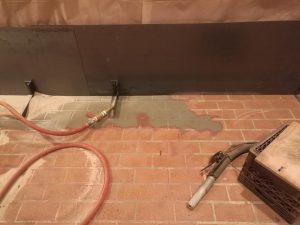
Spray paint is engineered to stick. On a porous surface like brick, block, or bare concrete, the solvent carries pigment down into the pores, so the color sits below the surface, not just on it. That is why a pressure washer or an off-the-shelf graffiti remover often leaves a faint “shadow” or ghost of the tag behind — the top layer comes off, but the pigment that soaked in stays put. Push harder with chemicals or high pressure and you risk etching the masonry or driving the stain deeper. Effective graffiti removal has to lift the paint out of the surface, which is exactly what blasting does.
The best removal method by surface
There is no single right answer — the surface decides the method:
| Surface | Best approach |
|---|---|
| Brick & masonry | Gentle abrasive or dustless blasting with fine media, matched to the mortar and tested first |
| Concrete & block walls | Abrasive blasting — cuts pigment out of the pores without leaving a ghost |
| Metal (doors, signs, fences) | Media blasting at controlled pressure; can prep for repaint in the same pass |
| Painted or coated walls | Light blasting or chemical-assisted removal, often followed by a fresh coat |
For metal roll-up doors, fences, and signs, removing the graffiti and prepping the surface for new paint can happen together — the same approach we use for metal sandblasting. On poured walls and curbs, the porous concrete responds best to the method behind our concrete blasting service.
Why dustless blasting works well on graffiti
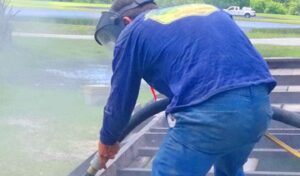
For masonry and mixed surfaces, dustless blasting is often the best of both worlds. It mixes water with abrasive media, so it knocks pigment out of the pores like dry blasting but with far less airborne dust — which matters on a busy storefront or a public wall where you cannot shut down the whole area. The water also helps flush the loosened paint away rather than blowing it across the street. You can read more about how it works on our dustless blasting page. For older buildings and historic brick, the same care we use for brick and masonry blasting applies — soft media, low pressure, and a test patch before we touch the main wall.
Removing graffiti without damaging the surface
The biggest risk in graffiti removal is trading a paint problem for a damage problem. Blast too aggressively and you can pit metal, gouge soft brick, or strip the cream layer off concrete and leave a permanent light patch. The way to avoid that is straightforward: match the media and pressure to the surface, start with a test area in an inconspicuous spot, and adjust before committing to the whole wall. On historic masonry especially, gentler is almost always better — you can always step up, but you cannot un-etch a wall. Because abrasive blasting raises fine dust and older coatings can contain lead, a professional job also follows OSHA’s abrasive blasting safety requirements for containment and protection.
Fast response keeps tags from coming back
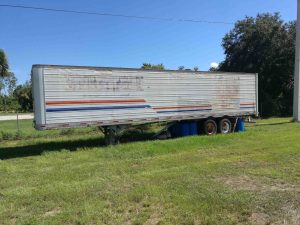
Graffiti is partly a visibility problem. The longer a tag stays up, the more it signals that no one is watching — which tends to attract more tagging. For HOAs, property managers, and Gainesville business owners, quick removal is the cheapest deterrent there is. Because our unit is mobile, we come to the wall, the yard, or the storefront anywhere in Alachua County rather than asking you to bring the surface to us.
How the removal process works, step by step
Most graffiti jobs follow the same arc. First we look at the surface and the paint: what material was tagged, how porous it is, and what kind of paint or marker was used. If the tag includes marker or is on etched or coated glass, we adjust the approach, since those behave differently than spray paint. Next we test a small, low-visibility area to confirm the media and pressure lift the paint cleanly without harming the substrate. With the settings dialed in, we work across the tagged area, and on porous masonry we focus on pulling pigment out of the pores rather than just skimming the surface. Finally we clean up the loosened paint and spent media, and on metal we can prime or prep the surface for a fresh coat in the same visit. The whole thing is usually a few hours for a typical wall or door.
What graffiti removal costs and what drives the price
We do not quote a flat rate sight unseen, because the price tracks the work involved. The size of the tagged area is the obvious factor, but the surface matters just as much: a smooth painted metal door cleans up faster than deeply porous, decades-old brick that has soaked up pigment. Access plays a role too — a ground-level wall is quick, while a tall or awkward surface needs staging. Repeat tags layered over previous removals take more work than a single fresh hit. The honest way to price it is a quick look, which is why our on-site estimates are free.
Preventing the next tag: anti-graffiti coatings
Once a surface is clean, you can make the next removal far easier. Anti-graffiti coatings — clear sacrificial or barrier coats — seal the pores so paint cannot soak in. When a wall treated this way gets tagged again, the graffiti sits on top and wipes or washes off with much less effort, often without another full blast. For property owners who keep getting hit, pairing a proper blast-clean with a protective coating is the most cost-effective long game, and it is a small add-on that pays for itself the second or third time a tagger comes back. We can talk through coating options as part of our painting and coating services when we quote the removal.
Graffiti on different surfaces, in more detail
Brick and natural stone are the most demanding, because the pigment hides in an irregular, porous surface; gentle media and patience win here, and aggressive blasting can leave a wall looking scoured. Concrete and block tolerate a firmer approach but still ghost easily if pigment is left in the pores, so the goal is full removal, not a quick skim. Painted and coated walls are a judgment call — sometimes the cleanest fix is to remove the graffiti and the surrounding coating together and repaint, since spot-removal can leave a visible halo. Bare metal — doors, signs, fences, utility boxes — usually cleans up fastest and can be prepped for new paint in the same pass.
Why DIY graffiti removal often backfires
The hardware-store approach — a pressure washer plus a can of graffiti remover — works on a fresh tag on a smooth, sealed surface, but it struggles everywhere else. On porous brick or concrete it tends to drive pigment deeper or leave a ghost, and harsh chemicals can discolor masonry or strip the surrounding finish. Cranking up a pressure washer to compensate is how people etch lines into soft brick or blow out mortar joints. Blasting avoids those traps because it lifts pigment out mechanically and the media and pressure are matched to the surface — but doing that safely takes containment and respiratory protection, which is a big part of why it is usually worth handing off.
For commercial properties, HOAs, and managed buildings, there is also a practical benefit: a professional removal is documented, insured, and repeatable, and the surface comes back ready for an anti-graffiti coating that turns the next incident into a quick wipe-down instead of another full job.
Graffiti removal in Gainesville: FAQs
Can you fully remove graffiti from brick without leaving a shadow? In most cases, yes. Blasting lifts pigment out of the pores, which is what eliminates the ghosting that pressure washing and chemicals leave behind. Very porous or old brick is handled gently and tested first.
Will removal damage the wall? Not when the media and pressure are matched to the surface. We test an inconspicuous spot before doing the full area, especially on masonry.
Can you remove graffiti and repaint in one visit? On metal doors, signs, and fences we can strip the tag and prep the surface for fresh paint in the same job. Ask about our painting and coating work when you call.
Do you serve commercial properties and HOAs? Yes. We handle storefronts, warehouses, dumpster enclosures, and community walls across Gainesville and the surrounding area, and we can respond quickly to keep repeat tagging down.
Need sandblasting in Gainesville or nearby? Call 352-663-1129 for a free on-site estimate.