Sandblasting vs. pressure washing is one of the most common decisions Gainesville property owners face when a surface starts looking rough: rusted railings, a peeling deck, a stained driveway, a painted brick wall. Both methods clean, but they do completely different jobs — and choosing the wrong one either wastes money or damages the surface. The short version: pressure washing removes what is sitting on a surface, while sandblasting removes what is bonded to it. This guide explains what each method actually does, when each is the right call, how they compare surface by surface, and what each typically costs in North Central Florida.
What Each Method Actually Does
Pressure washing drives water at high pressure — usually 1,500 to 4,000 PSI — across a surface to flush away loose dirt, mildew, algae, pollen, and grime. Soft washing does the same job at lower pressure with detergents, which is safer for siding and roofs. Water is excellent at removing biological growth and loose debris, and in Florida’s humid climate that is half the battle on any exterior surface. What water cannot do is cut through material that is chemically bonded to the substrate: cured paint, epoxy, rust, mill scale, or stain that has soaked into wood or concrete pores.
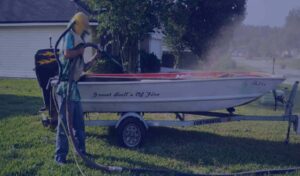
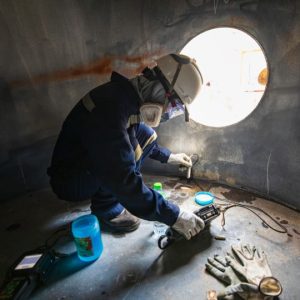
Abrasive blasting propels media — crushed glass, slag, garnet, glass bead, walnut shell, and more — at the surface with compressed air. Instead of rinsing the surface, it mechanically cuts the coating away. On steel, it also leaves a textured profile that primers and industrial coatings grip, which is why blasting is the standard preparation step before serious coating work. Our dustless blasting variant mixes water with the abrasive to suppress dust, making blasting practical in neighborhoods and occupied properties.
When Pressure Washing Is Enough
Reach for a pressure washer (or hire one) when the problem is on the surface, not in it:
- Mildew, algae, or green staining on siding, fences, or pool decks
- Pollen, dust, and general grime before repainting a surface whose existing coating is still sound
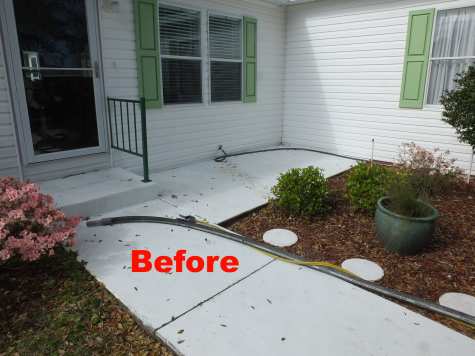
- Dirt and tire dust on a driveway or sidewalk that just needs freshening
- Cobwebs, wasp nests, and organic buildup under eaves and soffits
- Routine annual cleaning — in North Central Florida’s humidity, most exteriors benefit from a yearly wash
One warning: if you find yourself cranking the pressure higher and higher to chase off peeling paint, stop. Extreme PSI gouges wood, etches soft brick, blows out mortar joints, and forces water behind siding — and it still will not remove a bonded coating evenly. Needing more pressure is usually the sign you have crossed into sandblasting territory.
When Sandblasting Is Necessary
Call a blasting crew when the problem is bonded to or soaked into the surface:
- Rust and corrosion on railings, trailers, equipment, and structural steel — water cannot remove oxidation; abrasive can. See our metal sandblasting service.
- Failing or multi-layer paint on wood, metal, brick, or concrete — blasting strips it down to clean substrate so the next coat actually lasts.
- Epoxy, sealers, and coatings on concrete — a pressure washer just polishes them; concrete blasting removes them and profiles the slab for the next coating.
- Stain and weathering soaked into wood — blasting with gentle media restores wood without the lap marks and fuzzing aggressive washing leaves.
- Graffiti and deep staining in masonry pores — paint soaks into brick and block; abrasive reaches into the pores where water cannot.
- Profiling steel for coating — industrial and marine coatings specify a blast profile, not a washed surface.
After blasting bare metal, plan to prime quickly — flash rust can appear within hours in our humidity, which is why we offer coating immediately after blasting under one contractor.
Surface-by-Surface: Which Method to Use
| Surface & problem | Recommended method |
|---|---|
| Siding with mildew or algae | Soft wash / pressure wash |
| Deck with dirt and green growth | Pressure wash |
| Deck or siding with failing stain or paint | Sandblast (gentle media) |
| Driveway with dirt and tire marks | Pressure wash |
| Driveway or floor with paint, sealer, or epoxy | Sandblast |
| Rusted metal — railings, trailers, equipment | Sandblast |
| Brick with mildew | Soft wash |
| Painted brick or graffiti | Sandblast (masonry-safe media) |
| Steel being prepared for industrial coating | Sandblast to specified profile |
| Vinyl siding (any problem) | Soft wash only — never blast vinyl |
What Each Method Costs
Pressure washing is the cheaper service by far — routine residential washes typically run in the low hundreds of dollars, often quoted around $0.10 to $0.50 per square foot depending on the job. Sandblasting usually runs $1.50 to $6.00 per square foot depending on surface and coating, because it involves heavier equipment, abrasive media, containment, and more labor. We break the numbers down fully in our Gainesville sandblasting cost guide.
But the real comparison is not price per square foot — it is whether the method solves your problem. Washing a bonded coating accomplishes nothing: the paint is still failing the day after, and you have spent money to get nowhere. Worse, repainting over a washed-but-failing coating means paying for paint that will peel with the old layer underneath it. If the coating is the problem, blasting once costs less than washing, repainting, and redoing it all a year later.
Can You Combine Both?
Often the best projects use both, in order. A wash first removes grease, mildew, and loose debris so the abrasive works efficiently; blasting then strips the bonded coating; priming and coating immediately afterward locks in the result. One caution before any paint removal on older property: homes built before 1978 may have lead-based paint, and removal is covered by the EPA’s Renovation, Repair and Painting rules. Tell your contractor the age of the building — dust-suppressed methods and proper containment matter.
How to Decide for Your Project
A simple field test: clean a small patch and let it dry. If the surface looks right and the coating stays put under a fingernail or scraper, washing was enough. If the coating lifts, flakes, or the stain is still in the surface, it is bonded — and blasting is the honest fix. If you are not sure, send us a photo or ask for a free on-site assessment in Gainesville or anywhere in Alachua County; we will tell you plainly if a basic pressure wash solves your problem before you spend money on blasting you do not need.
Florida-Specific Considerations
Our climate changes the math on both methods. North Central Florida’s humidity grows mildew and algae fast, which makes pressure washing a genuinely recurring need — most exteriors here benefit from a wash every year regardless of anything else. The same humidity is hard on coatings: moisture works into every crack and edge, paint fails sooner than it does in dry climates, and bare metal flash-rusts within hours of being stripped. That has two practical consequences. First, surfaces around Gainesville reach the “bonded failure” stage — where washing no longer helps — faster than most national advice assumes. Second, when you do blast, the recoat needs to happen promptly, which is why we schedule priming and coating immediately after blasting rather than leaving steel bare over a weekend.
Afternoon storms also matter for scheduling. Washing in the rain is pointless, and dry blasting needs a dry surface; our dustless system is more forgiving, but we still plan Florida jobs around the weather window. A local crew that works these conditions every week will plan that into your quote rather than discovering it mid-job.
Sandblasting vs. Pressure Washing FAQs
Will pressure washing remove paint? Only paint that is already failing loose — and chasing it with higher pressure damages the surface underneath. If paint is coming off in flakes while the rest stays stuck, the coating is failing and blasting is the proper fix.
Is sandblasting safe for wood and brick? Yes, when the media and pressure are matched to the surface. We use gentler abrasives like crushed walnut shell or fine glass on wood and historic masonry, often with a test patch first, so the substrate is preserved.
Can I rent a pressure washer and do it myself? For routine washing, absolutely — it is one of the most DIY-friendly maintenance jobs there is. Just keep the pressure modest on wood, screens, and mortar. Blasting is a different story: media selection, breathing protection, and containment make it a professional job for anything beyond small hobby pieces.
Which adds more value before selling a property? Washing makes a well-maintained property look its best. But if buyers will see rusted railings, a peeling deck, or a flaking driveway, washing will not hide it — restoring those surfaces properly is what changes an inspection report.
Need sandblasting in Gainesville or nearby? Call 352-663-1129 for a free on-site estimate.