One of the first questions people ask when they call us is simple: how long does sandblasting take? The honest answer is that it depends on the surface, the size of the job, and what is being removed — but you deserve more than “it depends.” Most residential and small commercial sandblasting jobs around Gainesville are finished in a few hours to a single day. Larger or more delicate projects can run two to several days. This guide walks through what actually drives the timeline, gives realistic ranges by project type, and explains why the fastest job is not always the best one.
What determines how long a sandblasting job takes
Five things move the clock more than anything else:
- Surface area. A single railing is quick; a 2,000 sq ft driveway or a whole log cabin exterior is not. Square footage is the biggest single factor.
- What is being removed. One thin layer of paint comes off fast. Decades of built-up coatings, heavy mill scale, or deep rust take several passes.
- The substrate. Steel takes aggressive media and moves quickly. Wood, brick, and historic masonry need gentler media, lower pressure, and a careful hand — which is slower by design.
- Access and setup. Masking, containment, scaffolding, and moving the unit around a tight site all add time before the first trigger pull.
- The finish spec. A surface that has to hit a near-white grade for coating takes longer than a quick scuff-and-clean.
Typical timelines by project type
These are realistic ranges for the kind of work we do across Alachua County. Every job is quoted on its own, but this gives you a starting point:
| Project | Typical time on site |
|---|---|
| Small metal items (gate, railing, patio set, wheels) | 1–3 hours |
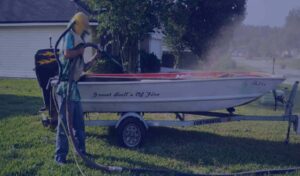
| Single boat or utility trailer frame | Half a day to a full day |
| Car body or restoration shell | 1–2 days (thin panels need care) |
| Concrete driveway or pad, paint/coating removal | Roughly half a day to a day per few hundred sq ft |
| Brick or masonry paint removal | 1–2 days, with test patches first |
| Wood deck or log cabin exterior | 1–3 days depending on size and stain depth |
| Structural or industrial steel | Multi-day, scoped per project |
Setup and cleanup: the time people forget
The blasting itself is only part of the day. Before any media flies, we mask off what should not be touched, set up containment so debris stays contained, and position the mobile unit. Afterward, the surface gets blown down and inspected, and spent media is cleaned up. On a dry sandblasting job that cleanup can be significant; one reason clients choose our dustless blasting service is that the water-and-media process knocks down airborne dust and leaves far less to sweep up, which can shorten the overall day.
Why we do not rush the blast
It is tempting to judge a crew by how fast they finish, but speed at the cost of quality is expensive. Over-blasting a thin steel panel can warp it. Too much pressure on wood or soft brick gouges the surface. And blasting to the wrong profile means the coating that follows will not hold. We would rather take the right amount of time and hand off a surface that is genuinely ready — the way we approach every job on our metal sandblasting and concrete blasting work.
There is also a clock that runs after the blast. Once bare steel is exposed in Florida humidity, flash rust can begin within hours, so the schedule has to leave room to coat the surface while it is still clean. A job planned around that window beats one that finishes an hour earlier but has to be redone.
Weather, safety, and the Florida factor
Afternoon storms and high humidity are part of every Gainesville schedule. Dry blasting needs a dry surface, washing in the rain is pointless, and a soaked site can stall a job mid-day. A local crew plans around the weather window instead of discovering it mid-project. Containment and respiratory protection add time too, but they are not optional — abrasive blasting kicks up fine dust, and OSHA sets clear safety requirements for abrasive blasting that a professional crew builds into the plan.
How to get an accurate time estimate
The only way to give you a real timeline is to look at the actual surface. Our free on-site assessment lets us check the size, the coating, the substrate, and the access, then give you a realistic window — and because time and cost move together, that same visit drives your quote. If you want to understand how those numbers come together, our Gainesville sandblasting cost guide walks through it.
What a typical sandblasting day looks like
It helps to picture the actual sequence, because the blasting people imagine is only the middle of the day. A standard single-day job runs roughly like this: the crew arrives and walks the site with you to confirm scope and protect anything nearby. Vehicles, windows, landscaping, and adjacent surfaces get masked or moved. The mobile unit is positioned and the media and pressure are dialed in on a test spot. Then the blasting itself begins, working methodically across the surface in passes. As areas finish, they are blown down and inspected for missed spots, light rust, or remaining coating. Finally the site is cleaned up and, when the job includes it, the surface is primed or coated before we leave.
On that timeline, the trigger-pulling is often less than half the day. Setup and cleanup are where careful crews spend real time, and skipping them is how you end up with overspray on a car or media in a flower bed.
Can several items be done in one visit?
Often, yes — and batching is usually the most economical way to work. If you have a railing, a gate, and a couple of patio chairs, doing them together in one setup spreads the mobilization time across the whole batch instead of paying it per item. The same is true for a fleet of trailers or a set of fabricated parts. When you call, it helps to describe everything you want done so we can plan a single efficient visit rather than several short ones.
Bigger jobs and multi-day projects
Some work simply cannot be compressed into a day, and that is normal. A full log cabin exterior, a large industrial structure, or a project that has to be blasted and then fully coated in stages will run across multiple days. For those, we scope the job in phases — which sections get blasted and coated on which day — so the surface is never left bare and exposed to Florida humidity longer than necessary. Heavy coatings like layered industrial paint or thick mastic also add passes, because each layer takes time to cut through. Access drives multi-day jobs as much as size does: tight courtyards, second-story railings, or structures that need scaffolding all slow the pace, because the crew spends time repositioning and staging safely rather than blasting. Our wood sandblasting projects in particular reward patience, since rushing soft timber damages the grain.
Why a faster quote is not always cheaper
It is worth knowing that how long and how much are linked but not identical. A crew that promises to finish in half the time may be planning to skip containment, under-blast the surface, or use a lighter pass that leaves coating behind. That can cost you more later when the finish fails and the job has to be redone. When you compare quotes, ask what is included in the time — masking, containment, cleanup, and the finish grade — not just the headline hours. If your project is on a deadline like a property sale, an inspection, or an event, tell us up front; we can often sequence the work or add a second day to hit a date, but only if we know the constraint before we start.
Does the season affect the timeline?
In North Central Florida, it can. The summer rainy season brings near-daily afternoon storms and high humidity, which means we plan blasting for the drier part of the day and keep a close eye on the flash-rust window once steel is bare. Cooler, drier months give wider working windows and fewer weather stalls, so a job that might span two partial days in August could wrap in a single day in January. None of this changes the blasting itself — it changes how much usable working time there is in a day, which is why a local crew that schedules around Florida weather tends to give you a more reliable finish date than one that does not. When you call, we will factor the current conditions into the window we quote rather than promising a dry-weather pace in the middle of storm season.
How long does sandblasting take? FAQs
Can most jobs be done in one day? Yes — the majority of residential and small commercial jobs we handle are completed in a single day, often in just a few hours.
Does dustless blasting take longer than dry? The blasting time is comparable, and cleanup is usually faster because the dust is knocked down at the nozzle rather than floating across the site.
What can delay a job? Florida weather, heavier-than-expected coatings, difficult access, and delicate substrates that require slower, gentler work are the usual reasons a job runs long.
Do you coat the same day you blast? Whenever possible, yes. Coating while the surface is still clean avoids flash rust, so we plan the schedule around it.
Need sandblasting in Gainesville or nearby? Call 352-663-1129 for a free on-site estimate.